
Quick answer: As of 4 November 2026, SEC Nigeria’s records name Busha and Quidax as Accelerated Regulatory Incubation Programme participants, while its July 2026 circulars name Luno Fintech Nigeria Limited and KuCoin Nigeria Limited as firms cleared for admission. Quidax and Luno document naira bank transfers for deposits and withdrawals. The SEC says an Approval-in-Principle is not a final licence.
Swapto publishes this guide. Swapto is a sell app, not an exchange, so it is not ranked here. We judged every exchange on the same criteria, listed under ‘How we compared these exchanges’.
Last checked: 4 November 2026.
Which crypto exchanges in Nigeria are on SEC records?
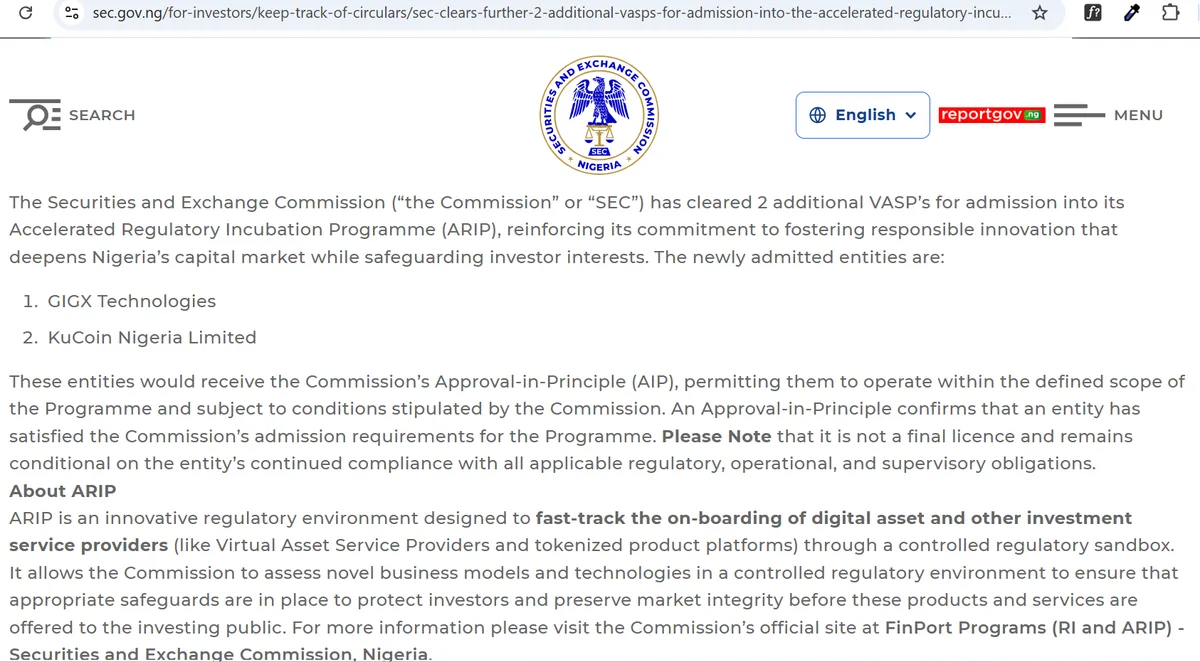
The Securities and Exchange Commission (SEC) Nigeria monitors firms through the Accelerated Regulatory Incubation Programme (ARIP) for digital assets and other investment service providers. Admission to the ARIP can lead to an Approval-in-Principle, but that approval is not the same as a final operating licence; it only means the entity satisfies the criteria for admission to the ARIP. The SEC emphasises this difference, adding that an Approval-in-Principle remains conditional on the firm’s continued compliance with its regulatory, operational and supervisory obligations.
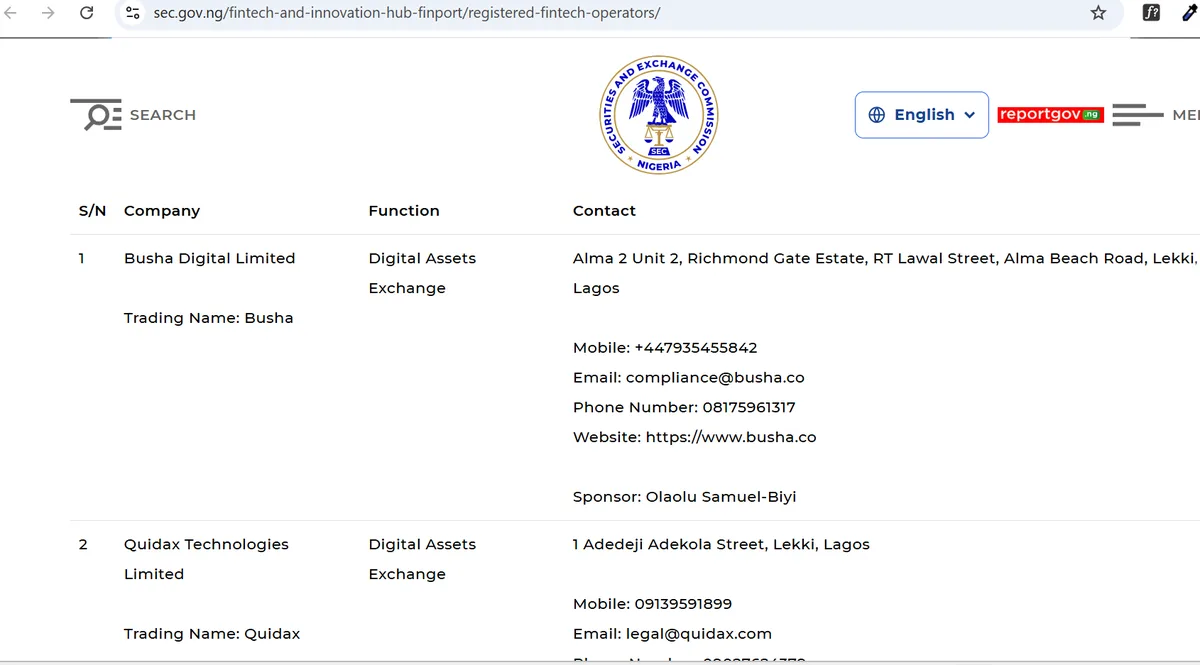
The SEC’s Registered FinTech Operators page (published 25 May 2025) mentioned two digital asset exchanges under ARIP:
- Busha Digital Limited, trading as Busha.
- Quidax Technologies Limited, trading as Quidax.
The information came before two other important announcements in July 2026, so it should not be read on its own.
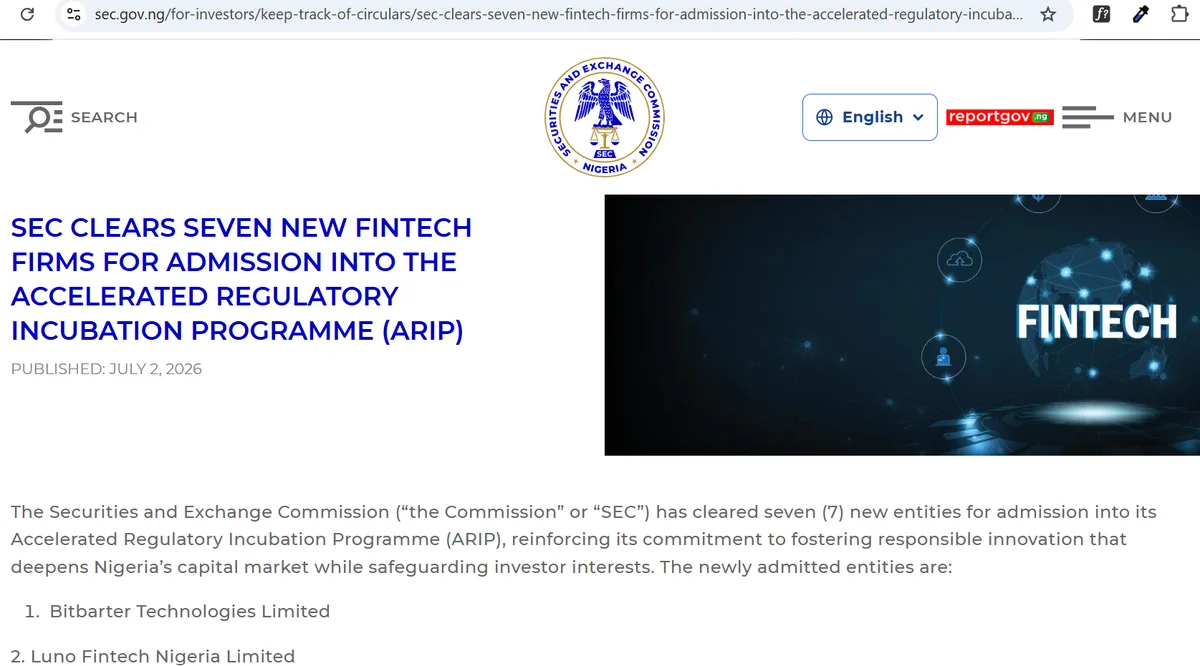
The SEC cleared seven firms for admission into ARIP through a circular released on 2 July 2026. One of them was Luno Fintech Nigeria Limited. Other names included are Bitbarter Technologies Limited, GetEquity Limited, Koinkoin Global Network Limited, Wrapped CBDC Ltd, Trovotech Ltd and Blockvault Custodian Ltd.
Two other firms, KuCoin Nigeria Limited and GIGX Technologies, were later cleared for admission in the SEC circular of 3 July 2026. While these announcements are important, they do not mean the companies are retail cryptocurrency exchanges with functional Naira deposits and withdrawals.
There have also been changes in the legal framework. The Investments and Securities Act 2025 brings virtual and digital asset exchanges and virtual asset service providers under SEC registration and regulation. The SEC’s digital asset rules, which were originally issued in 2022, offer an earlier regulatory framework governing digital asset activities.
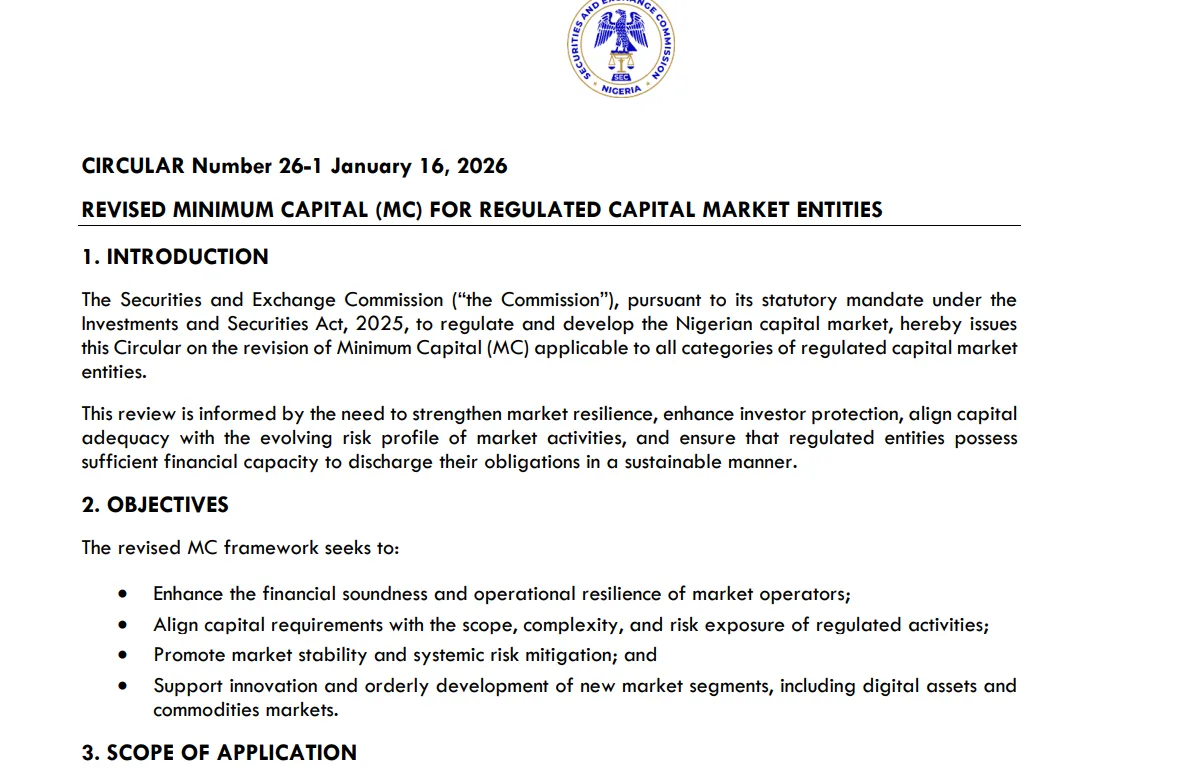
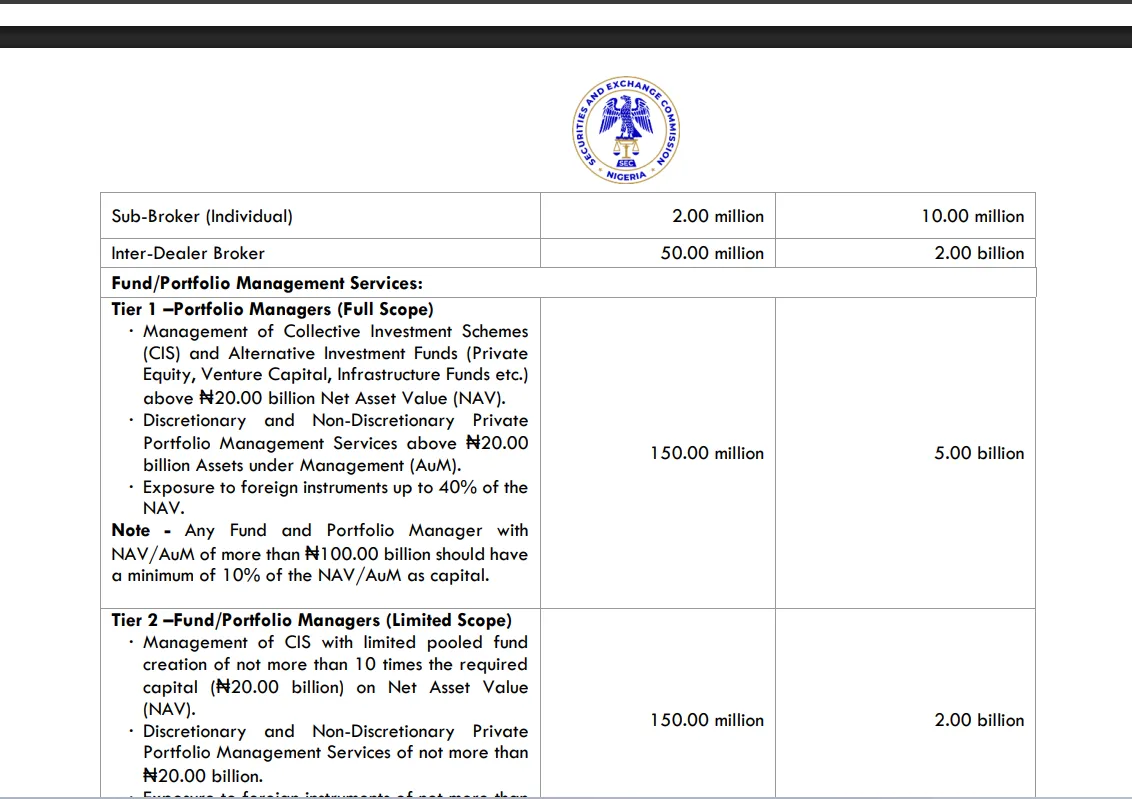
There is a huge requirement to note. The SEC’s revised minimum capital framework, published on 16 January 2026, sets the minimum capital for a Digital Assets Exchange (DAX) at ₦2 billion, with a compliance deadline of 30 June 2027. This is another reason the list of firms and their regulatory status may change.
How to check an exchange’s SEC status yourself
You don’t need to rely on third-party posts or publications to check the status of an exchange. You can check this directly from the regulatory bodies by:
- Opening the SEC’s Registered FinTech Operators page.
- Checking the SEC’s circulars page and searching for ARIP announcements.
- Knowing the company’s full legal name, not just the popular name displayed on its app. For example, the SEC circular names Luno Fintech Nigeria Limited, not just ‘Luno’.
- Reading the wording carefully. An Approval-in-Principle is not a final licence.

How we compared these exchanges
A comparison is useful when you understand why the platforms were included. The four factors considered are:
- Nigerian residents must be able to open an account at the time of checking.
- The platform must allow users to buy and sell cryptocurrency. Direct-sell platforms that only convert crypto to Naira are not included as exchanges.
- It must have an official Google Play or Apple App Store listing.
- The company must not appear in an SEC Nigeria warning or illegal-operator alert checked on the research date.
The platforms considered are then grouped according to the SEC records that were checked. We have Groups A and B. Group A includes companies named on SEC’s ARIP records or in relevant admission circulars, while Group B includes platforms not found in the SEC records checked. Group A platforms appear first in this comparison because they are recognised by the Nigerian regulatory body. However, this does not mean ARIP admission guarantees customer deposits or investment returns. Neither does it make the ‘Approval-in-Principle’ status an official licence.
Which are the best cryptocurrency exchanges in Nigeria in 2026?
| Exchange | Group | SEC status checked | Naira access documented | Score |
|---|---|---|---|---|
| Quidax | A | Named on SEC ARIP records (Registered FinTech Operators page) | Direct bank deposit and withdrawal | 61/100 |
| Luno | A | Approval-in-Principle announced 2 July 2026 | Bank deposit and withdrawal | 61/100 |
| Busha | A | Named on SEC ARIP records | Company describes local funding and bank or mobile-wallet credit; help-page evidence still required | 10/100 |
| Bybit | B | Not found on SEC records checked | NGN P2P; eight payment methods removed on 1 September 2026 | Not scored |
| Bitget | B | Not found on SEC records checked | NGN P2P page showed no eligible offers when checked | Not scored |
| KuCoin | B | KuCoin Nigeria Limited cleared for ARIP admission on 3 July 2026; app account entity not confirmed | Not confirmed | Not scored |
| OKX | B | Not found on SEC records checked | NGN P2P page exists; live offers not confirmed | Not scored |
| Roqqu | B | Not found on SEC records checked | Not established | Not scored |
The exchanges below are arranged according to SEC status and the documented scores. Do not take the word ‘best’ that is mentioned above as an endorsement for the most suitable platform for every user.
Group A: Companies named on SEC Nigeria’s ARIP records
Quidax
This is a cryptocurrency exchange that provides buying, selling and trading services, with a Naira wallet and direct bank-transfer options. The company behind the Quidax app, legally known as Quidax Technologies Limited, appears on the SEC’s FinTech Operators page under ARIP as a Digital Assets Exchange (page published 25 May 2025). The company describes itself as having a provisional Digital Assets Exchange licence.
Quidax’s help centre says the direct bank transfer is widely used as the Naira deposit channel. Users are provided with an account number for deposit transactions, and the bank account name must match the name on the Quidax account.
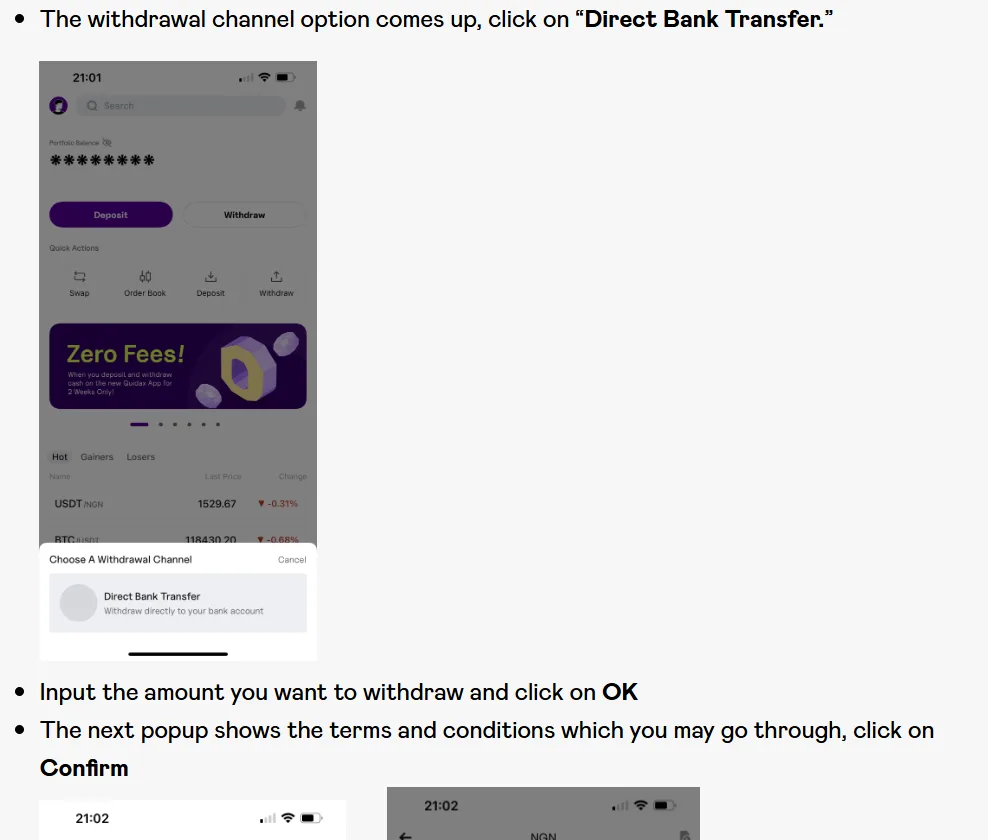
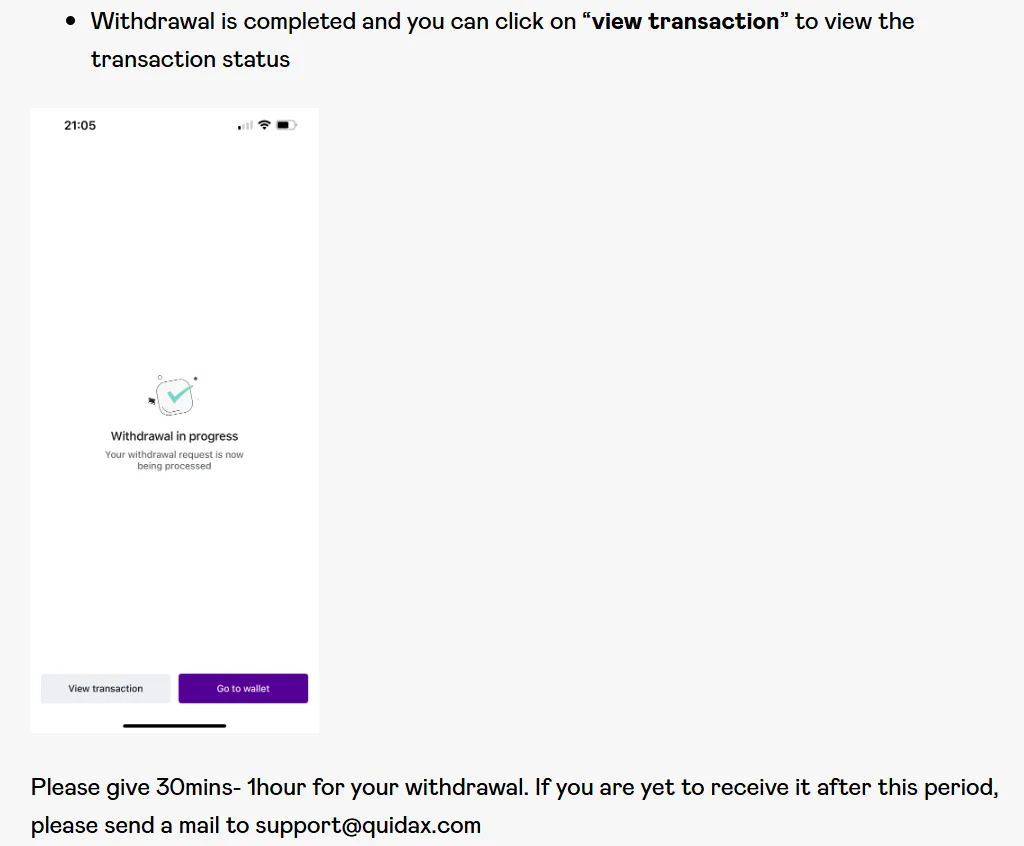
Quidax’s withdrawal guide tells users to wait 30 minutes to 1 hour for a withdrawal; this is the company’s timeframe, not a result of our test. As a security measure, the guide also describes email verification and Google Authenticator two-factor authentication as part of the withdrawal process.
Its SEC-listed ARIP participation gives it a documented regulatory presence in Nigeria.
Its terms state that withdrawal processing is not guaranteed within a specific period.
What people say about Quidax
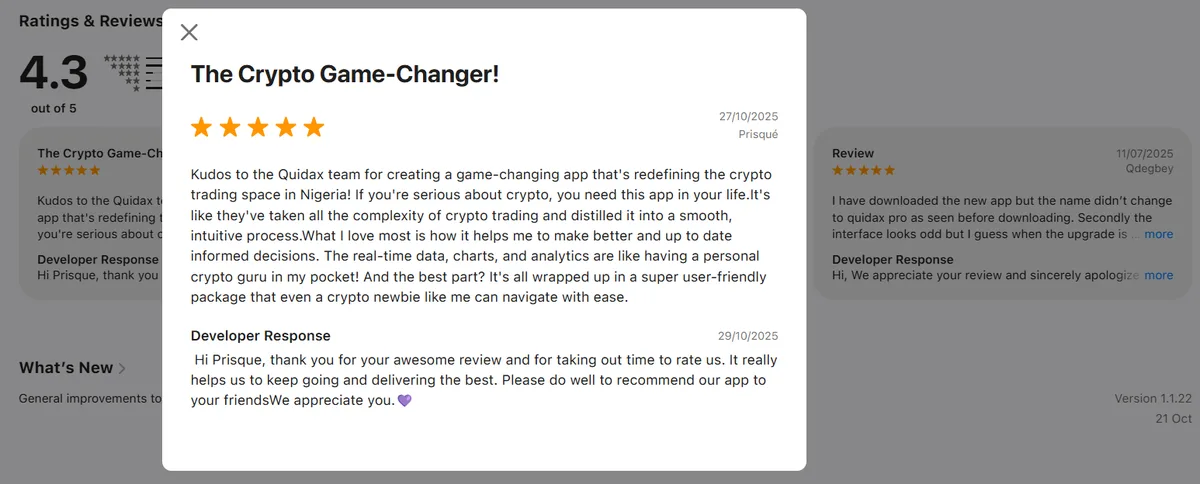
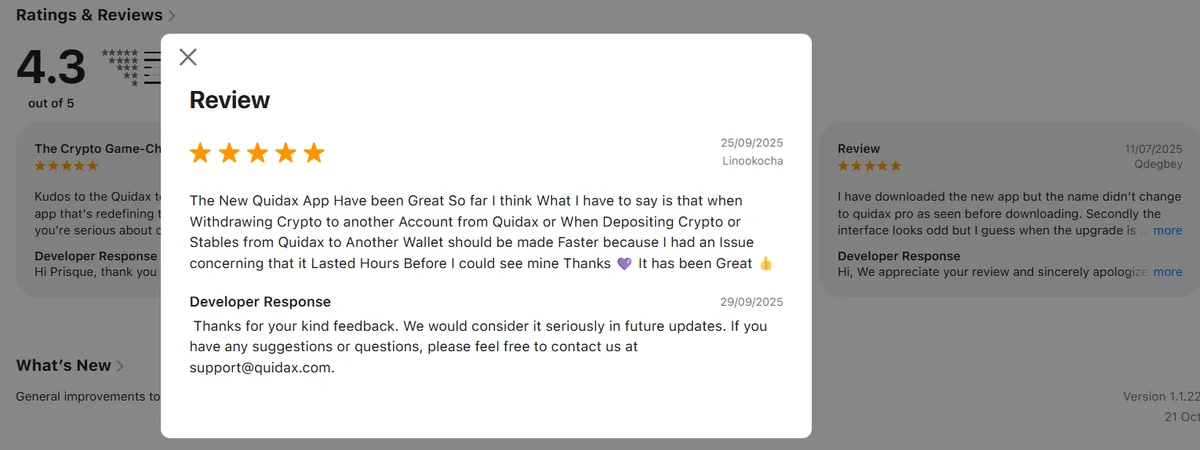
A publication by Quidax in June 2026 lists a free direct bank-transfer deposit, a flat ₦200 direct bank-transfer withdrawal fee and an additional ₦50 stamp duty on withdrawals of ₦10,000 and above. Because platforms change their fees and charges, users are advised to check the live fee page before trading.
Quidax’s KYC has two verification levels. Basic verification requires a valid identity document and a real-time selfie. Advanced verification requires an additional bank statement or utility bill that shows the customer’s name and address. For help and support, you can reach Quidax at support@quidax.com.
Quidax is a good fit for a user looking for a platform with documented direct Naira bank deposits and withdrawals, published verification requirements and a stated withdrawal window.
⚠️ Watch out for: Quidax’s withdrawal guide gives a 30-minute to one-hour estimate. This is not a guarantee that all withdrawals will fall within that period.
Last checked: 4 November 2026.
Luno
Luno is a cryptocurrency platform that allows its users to buy and sell cryptocurrencies and use a Naira wallet. The SEC’s circular published on 2 July 2026 names Luno Fintech Nigeria Limited among the seven firms that were cleared for admission into ARIP. Luno says it has received Approval-in-Principle for admission to the programme.
Luno’s fees and limits page shows bank transfer and voucher deposits as its popular Naira route. Luno claims that there is a selling cost of 2% for instant selling from the Portfolio screen. There is a separate maker and taker fee schedule for exchange orders. The lowest published tier for regular exchange trading lists a 0.10% maker fee and a 0.10% taker fee, although your applicable tier and order type should be checked before trading.
You’ll also have to factor in a withdrawal fee. Luno has published its figures for bank transfer provider fee on its fee page. The table shows bank transfer deposit and withdrawal flat fees of ₦150 and ₦300 respectively (excluding VAT).
It publishes clear Nigeria-specific deposit and withdrawal fees and transaction limits.
Its Nigerian bank withdrawals carry a ₦300 provider fee, excluding VAT.
What people say about Luno
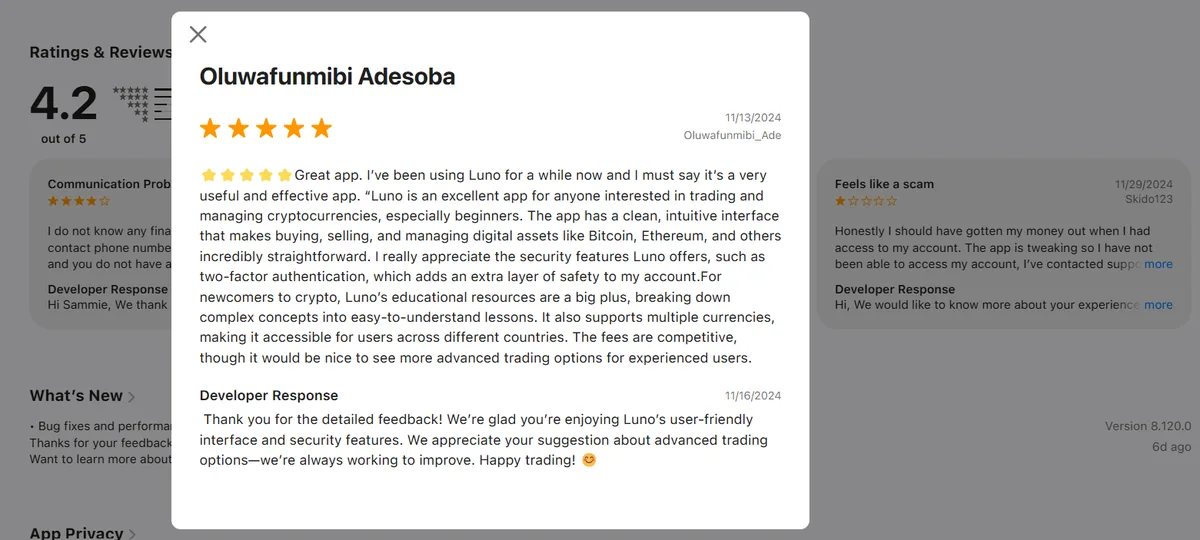
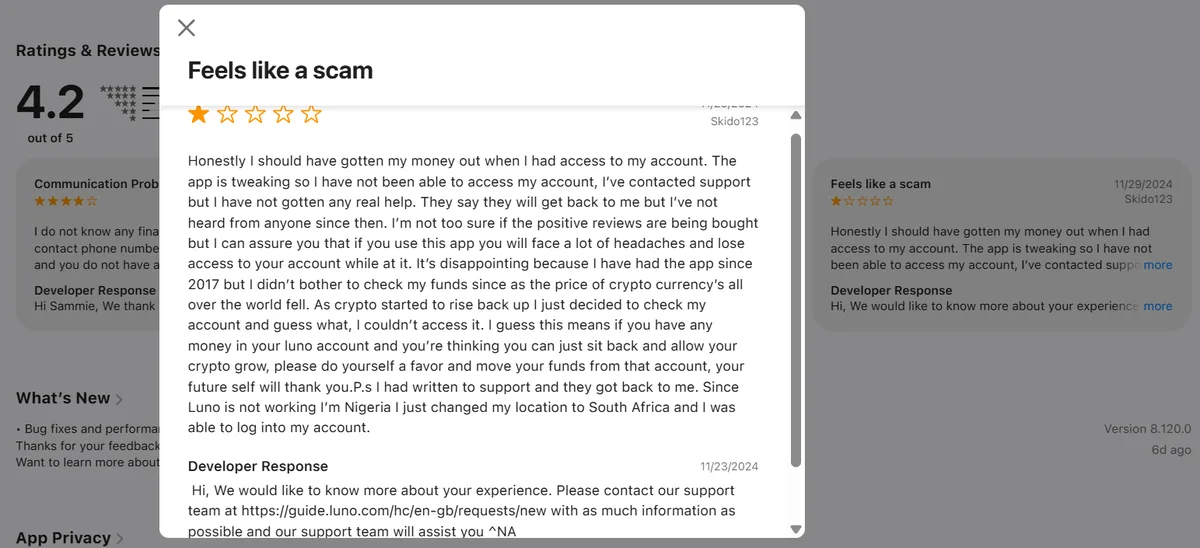
Luno accepts government identity documents and a selfie for its KYC verification. However, above a certain transaction amount in a user’s account, Luno requests additional verification for the user’s address. For help and support, Luno provides digital support through its Help Centre at support@luno.com. Luno documents two-factor authentication and provides guidance on protecting account access.
Luno is good for someone who wants an exchange with a bank transfer option with local currency, low fees and clear identity-verification requirements.
⚠️ Watch out for: The fees can include payment-provider charges and VAT. There are account limits based on your level of verification, so check the amount shown in your account rather than assuming that every customer has the same limits.
Last checked: 4 November 2026.
Busha
Busha is a digital exchange that allows users to buy, sell and trade digital assets. Officially known as Busha Digital Limited, Busha appears on the SEC’s Registered FinTech Operators page under ARIP as a Digital Assets Exchange. Busha says it is “SEC-licensed”, while the SEC record identifies the company as an ARIP participant.
Busha allows users to sell and receive credit directly in a bank account or mobile wallet. The exact withdrawal steps, eligibility conditions and stated processing time are yet to be confirmed.
Fees: Busha’s deposit and withdrawal fees for their Nigerian users are NGN150 and NGN107.50 (7.5% VAT inclusive) respectively.
Busha accepts Nigerian identity documents such as an NIN slip, national passport or driver’s licence, together with a selfie video for its verification. If you face any difficulty or you need official support, you can reach out to eng@busha.co for help, questions and feedback.
It is listed by the SEC as a Digital Assets Exchange under ARIP.
Its SEC listing is an ARIP participation record, not a final operating licence.
What people say about Busha
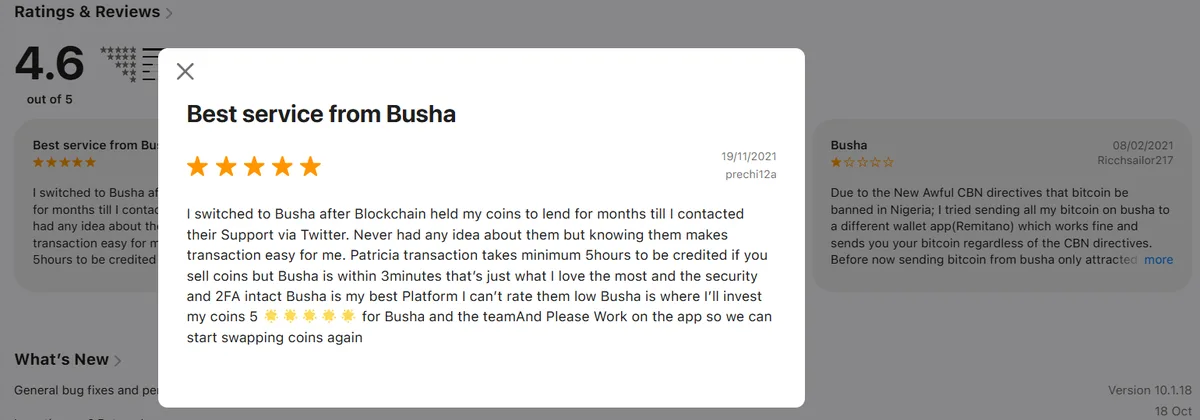
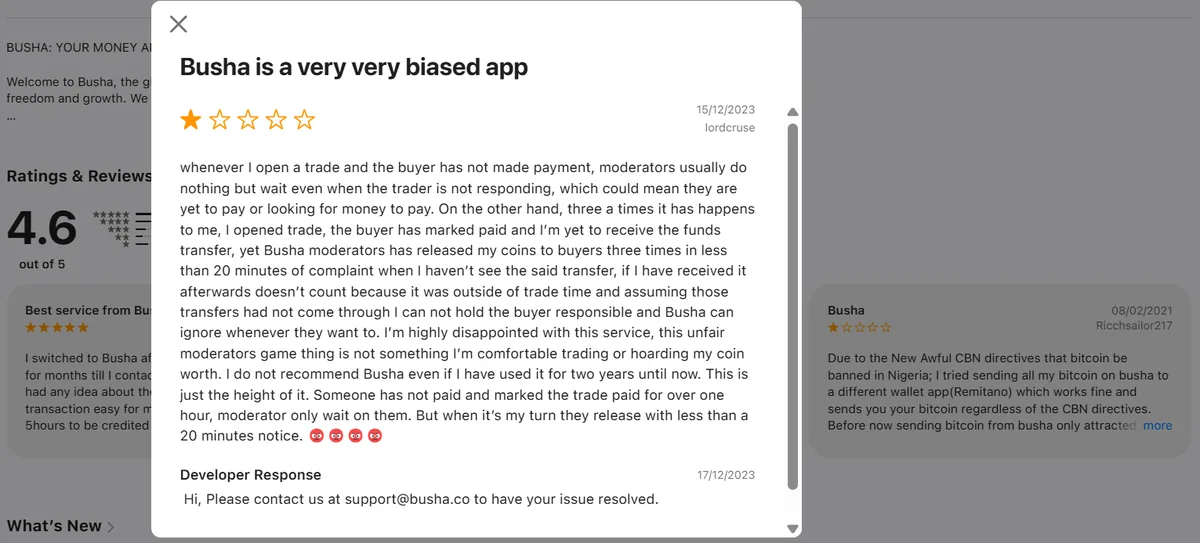
Busha makes a good option for a reader who wants to know an exchange that is named on the SEC’s ARIP statement and is willing to confirm the current deposit, withdrawal and verification conditions directly with Busha.
⚠️ Watch out for: Watch out for: Confirm how Busha handles local funding and mobile-wallet payouts before you deposit.
Last checked: 4 November 2026.
Group B: Not found on SEC Nigeria records checked
The exchanges in this category should not be considered bad, unlicensed or illegal. They were just not found on the SEC Nigeria records that were checked on 4 November 2026. These apps include:
Bybit
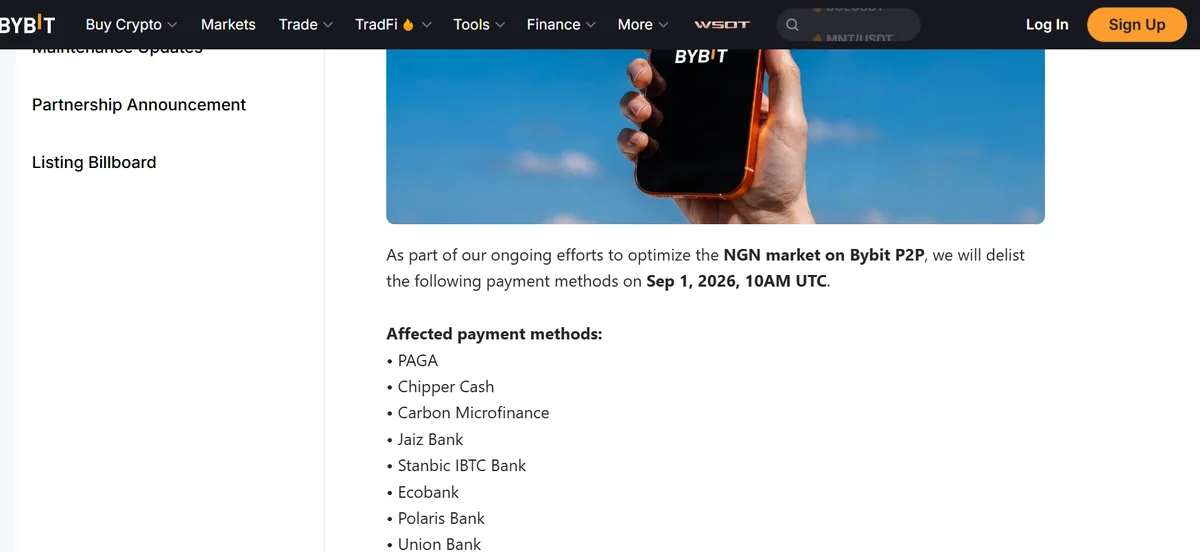
Its official announcement confirms that eight payment methods were removed from the NGN P2P market on 1 September 2026.
It offers a broad range of cryptocurrency-related services and trading features.
Its Nigerian Naira services have been subject to restrictions and changes.
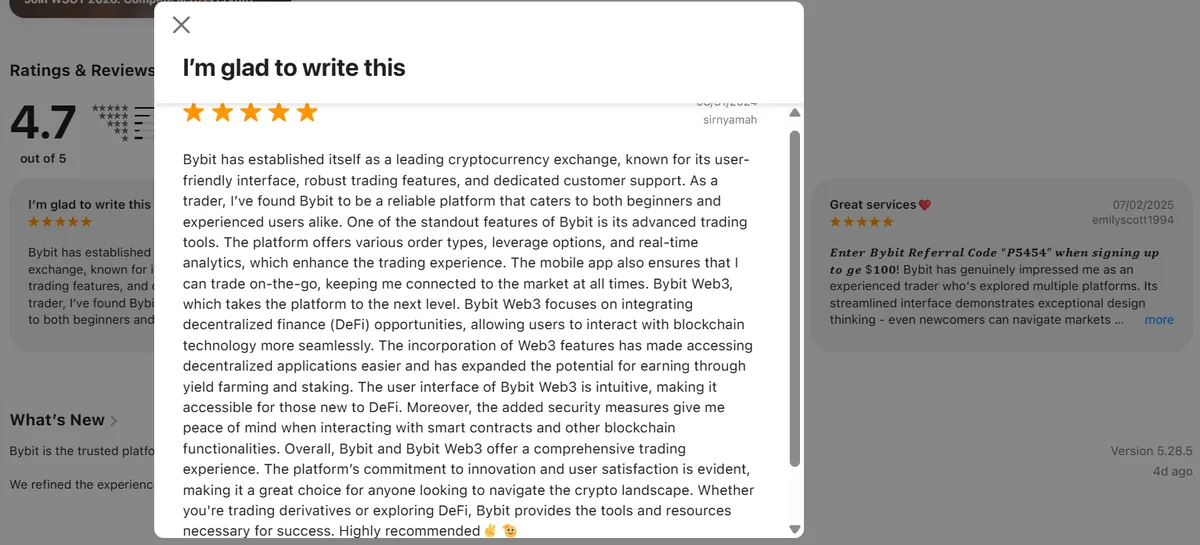
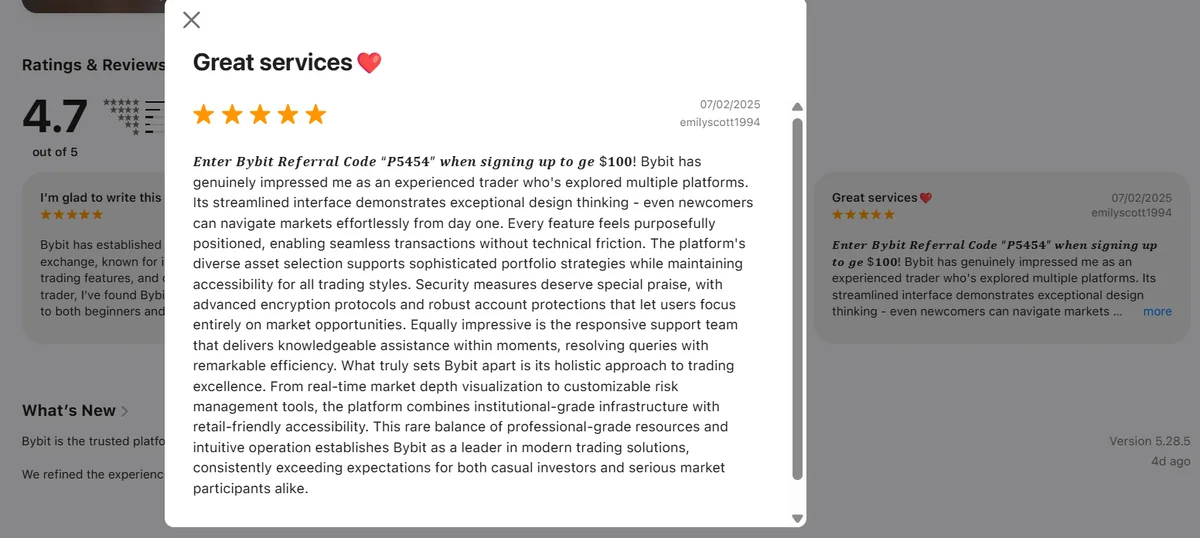
What people say about Bybit
Bitget
Its NGN P2P page did not show eligible offers in the page result checked for this guide.
It offers several cryptocurrency services within one international platform.
Its Nigerian regulatory status and local Naira access require careful verification.
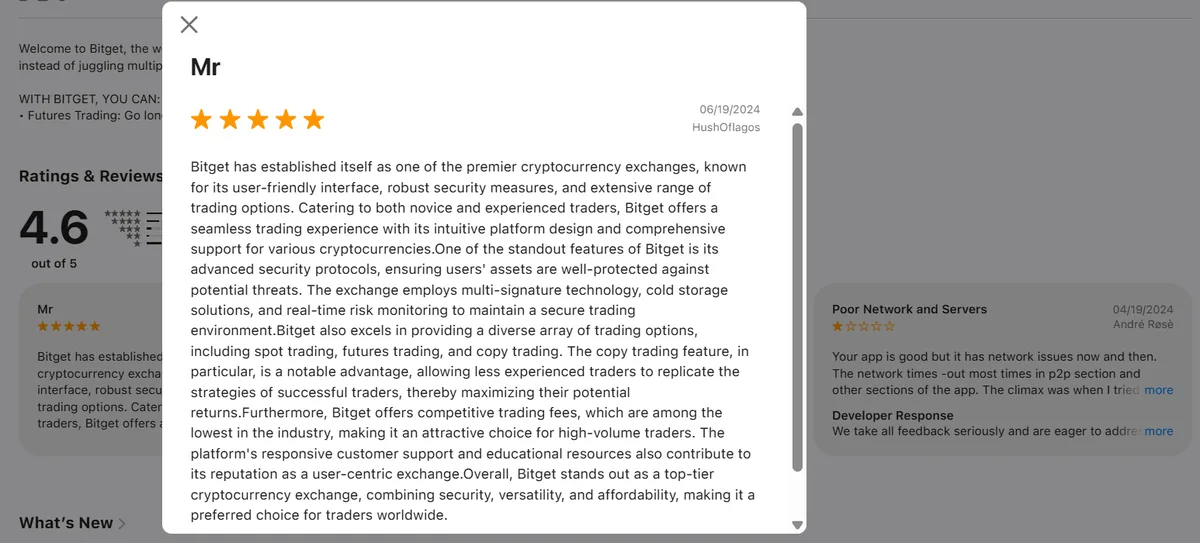
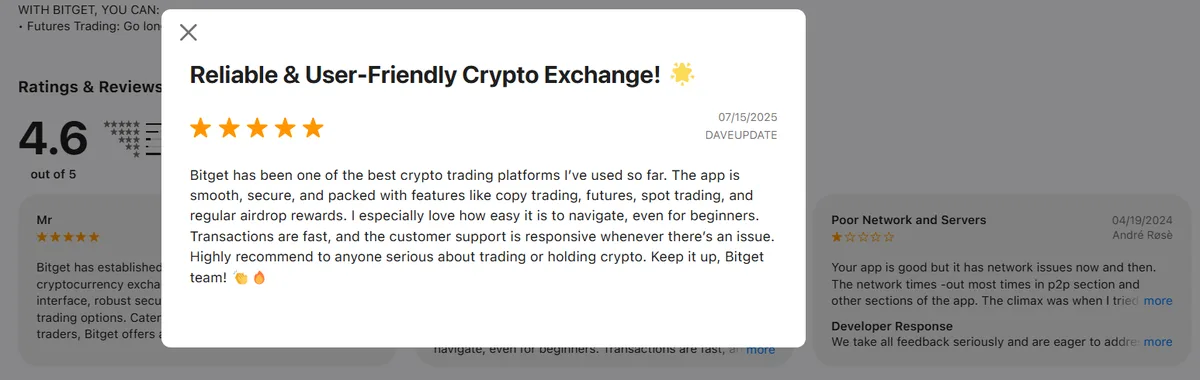
What people say about Bitget
KuCoin
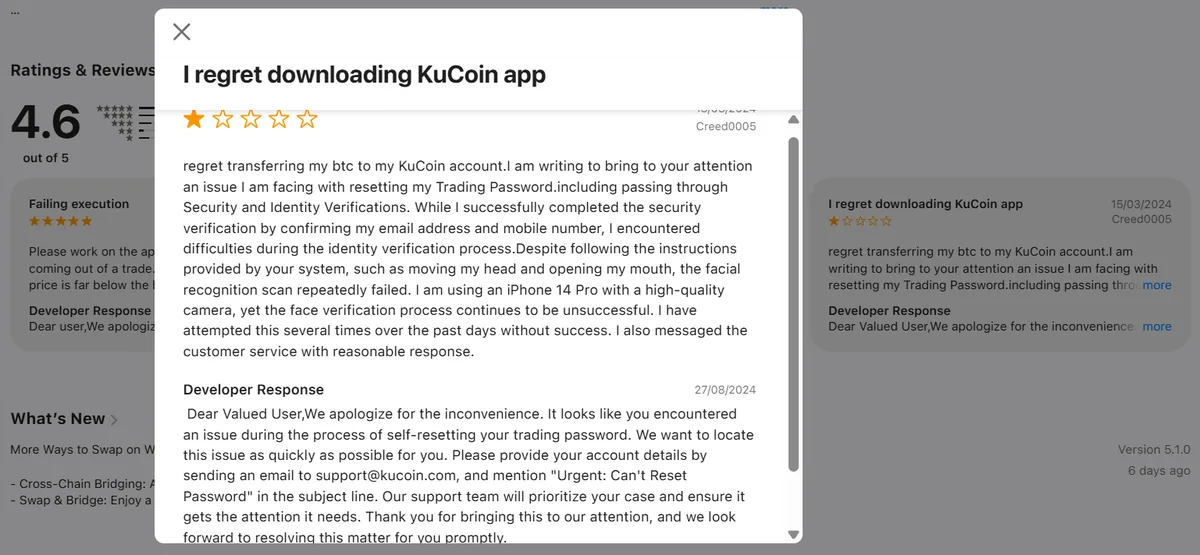
KuCoin Nigeria Limited was cleared for admission into ARIP, with an Approval-in-Principle, in the SEC circular of 3 July 2026. We could not confirm that Nigerian app accounts are held with that company, so KuCoin is listed here rather than in Group A.
It supports a wide range of digital assets and trading features.
Its Nigerian regulatory status and local Naira banking support require verification.
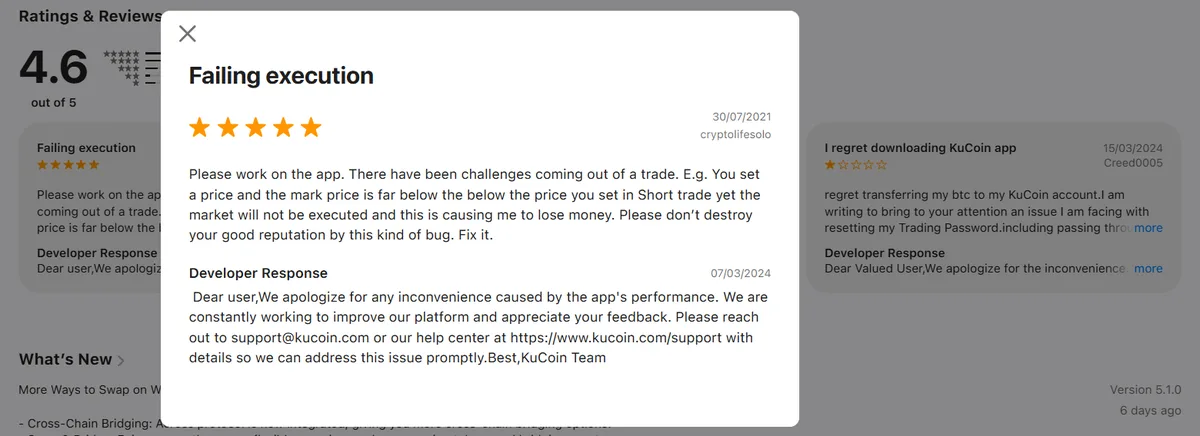
What people say about KuCoin
OKX
A page for NGN P2P trading exists, but this doesn’t automatically mean that live offers are available to Nigerian customers.
It offers a broad range of digital-asset services and trading tools.
Its Nigerian regulatory status and availability of local naira services require verification.
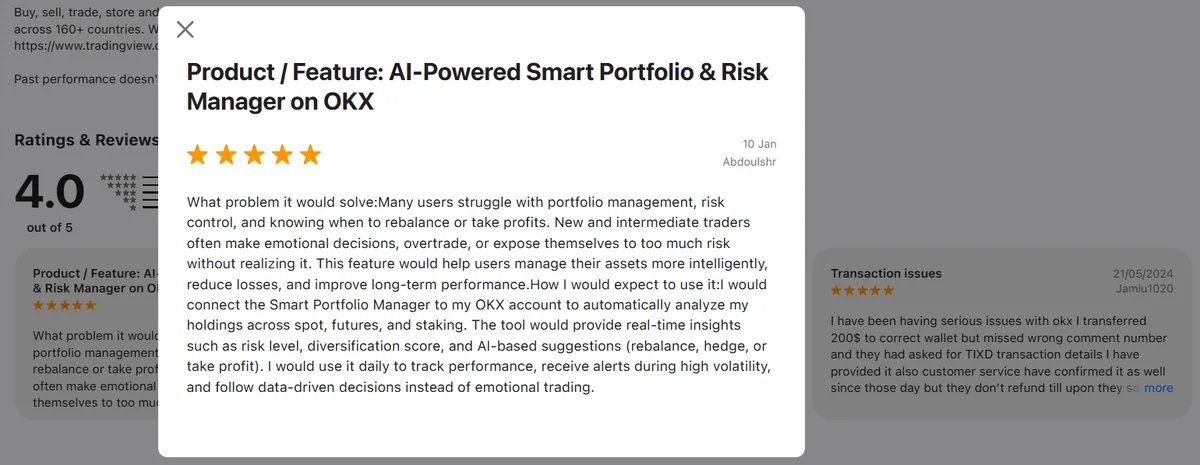
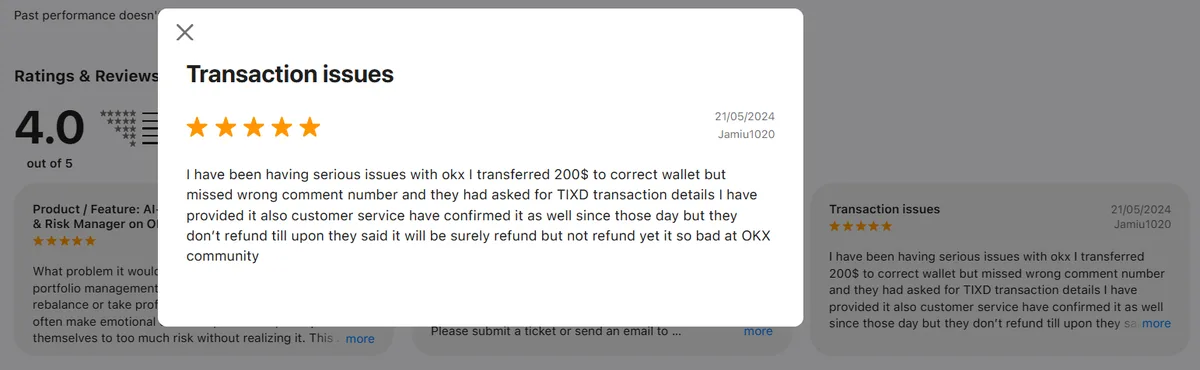
What people say about OKX
Roqqu
We could not establish the current naira deposit and withdrawal evidence required by this comparison.
It has a Nigerian-focused presence and publishes terms through Roqqu Nigeria Limited
Its public regulatory disclosures do not clearly establish a specific SEC licence.
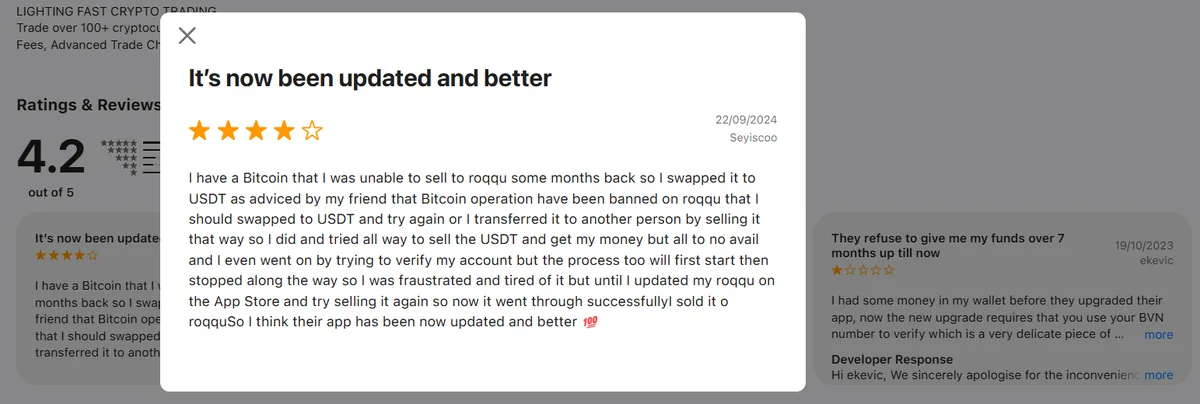
What people say about Roqqu
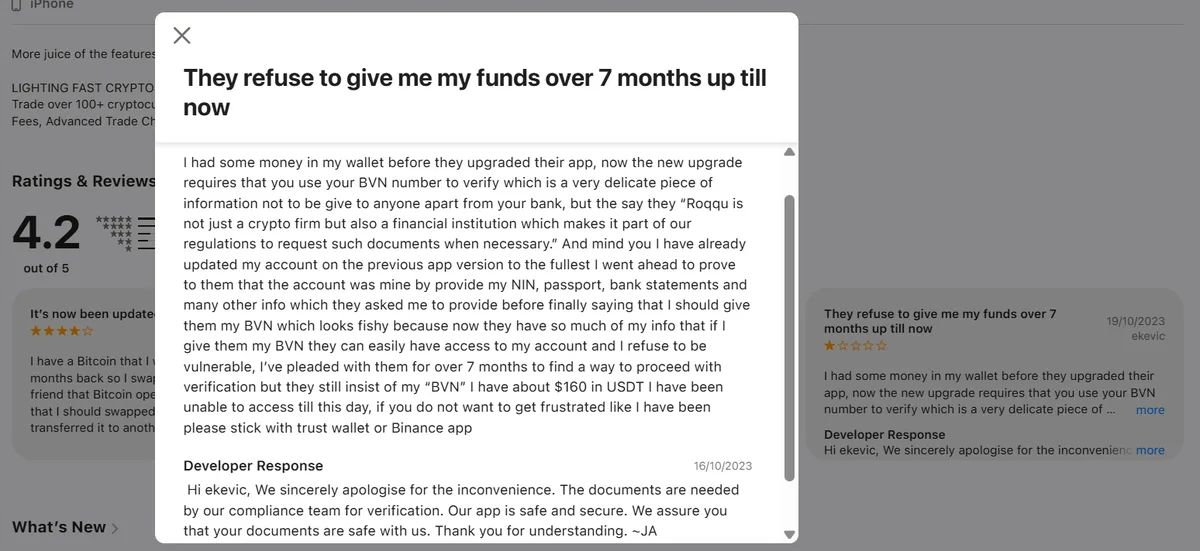
The other platforms that didn’t make Group B were left out because there was not sufficient public evidence to establish the conditions for those platforms to make the category on the checked date.
Why some names are missing
- Binance: It stopped its Naira services in 2024. The SEC also published warnings about Binance Nigeria Limited in June and July 2023. Read our guide on whether Binance is still available in Nigeria.
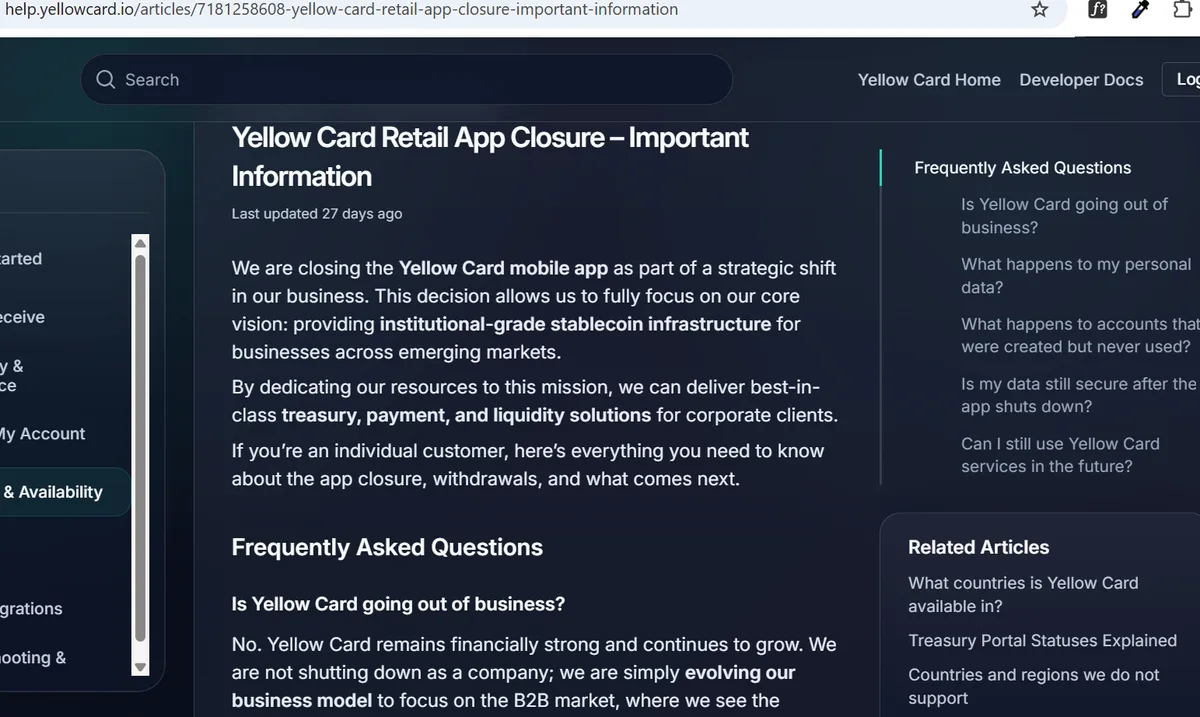
- Yellow Card: The company announced on 9 October 2026 that it was closing its mobile app and shifting its focus to business customers. Its notice says services for individual retail customers will no longer be available.
- Coinbase, Kraken and NairaEx: We could not confirm a current official naira deposit and withdrawal route that meets this article’s inclusion requirements.
- Swapto and Breet: These are sell apps, not exchanges. They belong in a comparison of apps that convert crypto to cash in Nigeria, not in this exchange ranking.
Which type of platform do you actually need?
A crypto exchange can mean different things to different people. A good understanding of what a crypto exchange really means can help you choose the type of platform that suits your needs. Below are three types of platforms:
- An order-book exchange: This matches buy and sell orders placed by customers. Buyers and sellers can set prices or accept existing orders. This gives users more control over their trades, but it requires a fair level of expertise and is not beginner-friendly.
- A peer-to-peer marketplace: This is popularly called the P2P. It connects users who want to buy or sell directly with one another, and for security, platforms hold the cryptocurrency in escrow while the payment is completed. However, this carries a significant level of risk that might eventually make you lose your assets to fraudsters. Read our guide on how P2P crypto trading works in Nigeria before using this type of service.
- A sell app: These are completely different platforms that allow users to send supported cryptocurrency, sell it at the app’s displayed rate and receive Naira. It is not necessarily an exchange with an order book or P2P marketplace.
If your goal is to buy and hold cryptocurrency, compare the exchange’s supported assets, withdrawal rules, fees and account security. Bear in mind that futures and leverage trading on order-book exchanges carries high risk; do not take such trades without professional guidance. Our guide to crypto wallets in Nigeria explains the difference between exchange accounts and personal wallets.
If you’re actively trading, understand the fees and risks before using exchanges. Exchanges are more complex than just buying and selling. If you only want to convert the cryptocurrency you already have into Naira, then you should consider the direct-sell apps.
Only want to sell crypto for naira?
Swapto publishes this guide. Swapto is a sell app that accepts BTC, USDT, ETH, TRX, USDC, BNB or LTC for Naira, and withdraws to any Nigerian bank in 5 to 10 minutes after you sell. It has an Auto-sell feature (which is optional). Swapto operates within Nigeria’s regulatory framework through a licensed partner.
Read the guide on apps that convert crypto to cash in Nigeria or visit sell crypto for naira on Swapto.
What happened to Binance, Bybit and Yellow Card in Nigeria?
These three names often appear in conversations about Nigerian cryptocurrency services, but their services in Nigeria have changed recently.
Binance
The SEC Nigeria in June 2023 declared that Binance Nigeria Limited was not registered or regulated by the Commission. This was followed by a second SEC warning in July 2023. Binance later shut down its Naira services in 2024: its NGN trading pairs on P2P were removed from its list on 28 February 2024. The NGN deposits closed on 5 March 2024 while the NGN withdrawals closed on 8 March 2024. These dates are significant because a platform can continue to be accessible even if a specific local-currency service has terminated.
For the latest explanation on what led to the company’s Naira exit, see our guide on whether Binance is still available in Nigeria.
Bybit
Bybit announced that it would remove eight payment methods from its NGN P2P market on 1 September 2026. The affected methods were Paga, Chipper Cash, Carbon Microfinance, Jaiz Bank, Stanbic IBTC, Ecobank, Polaris Bank and Union Bank.
The announcement concerns those payment methods. Users are advised to check the current payment methods in the app, to know the one suitable for them. Read our separate report on Bybit’s removal of Nigerian payment methods.
Yellow Card
Yellow Card published a memo to its users that the company is closing its retail mobile app as part of a shift towards business services. It states that services for individual retail customers will no longer be available. The company says it is continuing to serve business customers.
How do you check an exchange is safe before you deposit?
Being a popular or familiar brand with a good looking app or a high number of followers on social media does not prove that an exchange is legitimate. Before using a platform, take time to research the company behind the platform and their rules of operation.
Start with the SEC’s records. Search for the company’s legal name in the Registered FinTech Operators platform and go through the circulars. When a platform claims to be SEC approved, see if the status given by the SEC statement is a final licence or an Approval-in-Principle. The SEC reminds the public to check the credentials of anyone offering investment services.
The SEC’s warning about CBEX shows why this matters. It published a notice regarding CBEX and its entities, as well as an illegal-operator alert on 17 April 2025 and 11 June 2025, respectively. The June notice advised against the public’s patronage or transactions with the named entities. You can also read our guide on how to avoid crypto scams in Nigeria.
Only install an exchange’s app from the official app store listing on the company’s website. Before installing, be sure to verify the name of the developer. There are similar names and logos of the apps and impersonation accounts that are fraudulent. Know the platform’s fees, limits and KYC policies before you deposit. Ask and find out what other forms of identification would be requested and what will happen when your withdrawal is delayed.
Use two-factor authentication. Never give out your password, PIN, one-time password or recovery phrase to anyone. No genuine support representative will ever ask for your recovery phrase to recover your account. Our guide will teach you how to enable two-factor authentication.
When sending cryptocurrencies, verify the recipient address and network. If assets are sent to the incorrect address, they are usually lost permanently. It is also a good idea to make a small test transfer to a new address (before a larger transfer) to confirm the address and simultaneously minimise losses.
Note that ‘Approval-in-Principle’ is not a guarantee. The SEC states that it is not a “final licence”. It indicates that the firm fulfilled the entrance requirements for a supervised programme.
Do you pay tax on crypto you sell on an exchange?
From 1 January 2026, profits from selling crypto are taxable under the Nigeria Tax Act 2025 at personal income tax rates. Keep a record of what you bought, as well as the price and time you got or sold it. This is general information, not tax advice. The Nigeria Revenue Service (NRS), formerly the Federal Inland Revenue Service (FIRS), is the federal tax authority. Your individual activity may affect how a transaction is treated, so consult your qualified tax professional for the best advice.
Frequently asked questions
Which crypto exchanges are SEC registered in Nigeria?
The SEC’s records checked on 4 November 2026 named Busha Digital Limited and Quidax Technologies Limited as ARIP participants. July 2026 circulars also announced Approval-in-Principle for Luno Fintech Nigeria Limited and KuCoin Nigeria Limited. An Approval-in-Principle is not a final licence. Check the SEC’s official pages and circulars for the latest company status.
Is it legal to use a crypto exchange in Nigeria?
The CBN lifted its restriction on banks serving crypto businesses in December 2023, and the Investments and Securities Act 2025 brings virtual and digital asset exchanges and virtual asset service providers under SEC registration and regulation. This does not mean that every platform is approved or that every service is available to Nigerian customers.
Is an Approval-in-Principle the same as a licence?
No. The SEC says an Approval-in-Principle confirms that a firm has met the admission requirements for its programme, but it is not a final licence. Check the SEC’s latest records instead of relying only on an exchange’s description of its status.
Which exchanges let me deposit Naira by bank transfer?
Quidax and Luno’s help pages say that direct Naira bank transfer is supported for deposits and withdrawals. Busha describes local funding and bank or mobile-wallet credit on its website, but its detailed customer help-page evidence still needs to be confirmed for this comparison.
Can I still use Binance in Nigeria?
Binance ended its Naira services in March 2024. Its NGN P2P pairs were delisted on 28 February, NGN deposits ended on 5 March and NGN withdrawals ended on 8 March. Those dates describe the Naira services that were discontinued. See our guide on whether Binance is still available in Nigeria for the wider background.
Is Swapto a crypto exchange?
No. Swapto is a sell app, not an exchange. Customers send supported cryptocurrency, sell it for Naira and receive the Naira in a Nigerian bank account. Bills are paid from the naira balance after a sale. Swapto operates within Nigeria’s regulatory framework through a licensed partner. To know more about Swapto, read Is Swapto legit?
Do I pay tax when I sell crypto in Nigeria?
From 1 January 2026, profits from selling crypto are taxable under the Nigeria Tax Act 2025 at personal income tax rates. Keep a record of what you bought, when, and for how much.
Why might this list change?
The list might change because the SEC can publish new ARIP admissions, update its records or issue new regulatory requirements. Exchanges can also change their Naira payment methods, fees, verification rules and services available. The ₦2 billion minimum capital requirement for Digital Assets Exchanges has a 30 June 2027 compliance deadline. We plan to review this comparison monthly and after relevant SEC announcements.
The bottom line
A platform’s SEC status, Naira payment options, fees, verification requirements and security features all matter. Check the current company records and help pages before making a decision, because an exchange’s services and regulatory position can change.
For readers who only need to convert supported cryptocurrency into naira, get the Swapto app.
How we scored each exchange
| Exchange | SEC status checked | Naira access documented | Score |
|---|---|---|---|
| Quidax | Named on SEC ARIP records | Direct bank deposit and withdrawal | 61/100 |
| Luno | Approval-in-Principle announced 2 July 2026 | Bank deposit and withdrawal | 61/100 |
| Busha | Named on SEC ARIP records | Company describes local funding and bank or mobile-wallet credit; detailed help-page evidence still required | 10/100 |
These scores measure the public documentation we could verify against the method below. They are not a measure of investment quality, profitability, customer satisfaction or the safety of keeping money on an exchange.
The scoring system
Order inside each group, by points out of 100 (ties alphabetical):
- Naira rails, 30: bank deposit and withdrawal both documented on an official help page = 30; one direction = 15; naira through P2P only = 10; none confirmed = 0.
- Cost transparency, 20: a public fee page covering naira deposit, naira withdrawal and trading = 20; partial = 10; none = 0. We score the page, not the size of fees.
- Security, 20, documented features only: two-factor authentication 8, withdrawal address allowlist 6, published proof of reserves 6.
- KYC clarity, 10: a public page listing the ID needed and the limits.
- Support, 10: published channels and hours that serve Nigeria.
- Product range, 10: spot, recurring buys, P2P. Futures and leverage are noted but never earn points.
Note: The scores in this guide reflect the public documentation seen during the findings. A zero in a category means the required evidence was not established for this comparison. It does not automatically mean that a platform lacks the feature. Also, we reviewed publicly available company and SEC information. We did not initiate a test trade to confirm the findings.
Quidax: 61/100
| Category | Score |
|---|---|
| Naira rails | 30/30 |
| Cost transparency | 10/20 |
| Security | 8/20 |
| KYC clarity | 10/10 |
| Support | 0/10 |
| Product range | 3/10 |
| Total | 61/100 |
Luno: 61/100
| Category | Score |
|---|---|
| Naira rails | 30/30 |
| Cost transparency | 10/20 |
| Security | 8/20 |
| KYC clarity | 10/10 |
| Support | 0/10 |
| Product range | 3/10 |
| Total | 61/100 |
Busha: 10/100
| Category | Score |
|---|---|
| Naira rails | 0/30 |
| Cost transparency | 10/20 |
| Security | 0/20 |
| KYC clarity | 0/10 |
| Support | 0/10 |
| Product range | 0/10 |
| Total | 10/100 |