On September 1, 2026, Bybit delisted 8 Nigerian payment methods from its P2P marketplace. Users who rely on PAGA, Chipper Cash, Carbon Microfinance, Jaiz Bank, Stanbic IBTC Bank, Ecobank, Polaris Bank, or Union Bank were grossly affected by this development, as these methods are no longer available for creating or trading against the NGN.
For users who depend on one of those fintech accounts, the practical questions are; ‘what happens now?’, ‘what are your alternatives?’
There are a few options. You can also change your payment method that is supported by Bybit, switch to another P2P market, or look into OTC as well, where you trade directly with the platform instead of another individual trader. Here is what the change means, why it matters, and what Nigerian users should know.
The Full List of Affected Payment Methods and their Respective Banking Category
The 8 payment methods named in Bybit’s delisting announcement on the 1st of September are:
- PAGA: Nigerian digital payments and fintech platform under the Mobile Money Operator (MMO) category.
- Chipper Cash: Fintech and digital payments platform. It falls under the International Money Transfer Operator (IMTO) and Payment Service Provider (PSP)
- Carbon Microfinance: Digital lending and financial services platform under the Microfinance Bank (MFB) category.
- Jaiz Bank: Nigerian Islamic bank. It is a Non-Interest Commercial Bank.
- Stanbic IBTC Bank: Commercial bank.
- Ecobank: Commercial banking group operating in Nigeria.
- Polaris Bank: Commercial bank.
- Union Bank: Commercial bank.
This is not a change that is limited to a single bank. It impacts a combination of fintech payment accounts, microfinance institutions, an Islamic bank and a number of commercial banks.
What did Bybit say Delisting 8 Nigerian payment methods means?
Bybit’s announcement described the move as an effort to “optimize the NGN market on Bybit P2P.” The exchange said the 8 payment methods would no longer be available for creating NGN advertisements or trading against advertisements using them, thereby instructing users who currently have any of the affected methods in their P2P payment settings to add other supported payment methods. Active advertisements using the delisted methods would be removed.
Please note that Bybit did not announce that it was shutting down its Nigerian operations altogether. The announcement is specifically about 8 payment methods within its NGN P2P marketplace. So describing this as “Bybit leaving Nigeria” would go further than what the company has actually announced.
In case you’re wondering what P2P advertisement means, P2P (peer-to-peer) advertisements are custom listings that users create on a cryptocurrency marketplace to buy or sell digital assets with other people using local fiat currency. So instead of buying crypto instantly from a centralized exchange at a set market price, a user or merchant sets their own rules by posting an ad.
Why Is Bybit Delisting 8 Nigerian Payment Methods?
Bybit did not extensively breakdown the exact reasons why these 8 institutions were chosen or whether it is a government directive. However, it can be deduced that the action was aimed at improving the safety, reliability, and overall trading experience of their users.
We can also draw observations from the happenings in the wider Nigerian crypto market. The country’s P2P market has been under pressure since Binance discontinued its naira services in March 2024, where Binance announced that it would discontinue NGN-related services amidst increased regulatory scrutiny in Nigeria.
That change pushed some Nigerian traders towards other exchanges. A TechCabal report published in April 2024 found that Nigerian users were moving to platforms including Bybit, Bitget and KuCoin after Binance’s restrictions.
Since then, exchanges have continued similar changes to individual markets, currencies and payment methods. This proves that the payment methods and local P2P markets are not features that can be sustained for long.
For Nigerian users, the message is clear; a payment method being available today does not mean it will always remain available.
What This Means for Users
The immediate impact is noticeable in practice. As there were sufficient Bybit advertisers willing to transact through Stanbic IBTC, Ecobank, and others, removing those payment methods reduces the pool of compatible offers. This results in fewer advertisers, less competition between available offers and potentially less attractive rates. It can also mean spending more time looking for a suitable trading partner.
Likewise, users of Jaiz Bank may also feel the impact, due to their reluctance to get a commercial bank alternative that doesn’t promote similar interest as the Islamic bank.
There is also the presence of P2P fraud. A report by Technext and republished by MEXC, which surveyed more than 100 active Nigerian P2P traders and examined more than 20,000 social media posts. More than 70% of surveyed traders said they had lost money to scams at least once. Fake payment proofs were among the problems highlighted by the study.
The risks are real. P2P involves dealing with another person, and mistakes around payment confirmation, fake screenshots, account disputes, or moving conversations outside the platform can create problems.
Your Options Now
1. Add another Bybit-supported payment method
This is the simplest alternative recommended by Bybit. It involves the addition of another supported payment method and reviewing existing advertisements affected by the change. The downside here is that you may have to open a new account with the supported bank or payment account.
2. Try another P2P platform
Examples of platforms that may be a good alternative include Bitget and MEXC, which Nigerian crypto users have also explored, particularly since Binance’s NGN restrictions. However, changing platforms does not remove the fundamental P2P problem, which involves dealing with another trader you don’t know. This may expose you to counterparty risk, payment disputes, and scams.
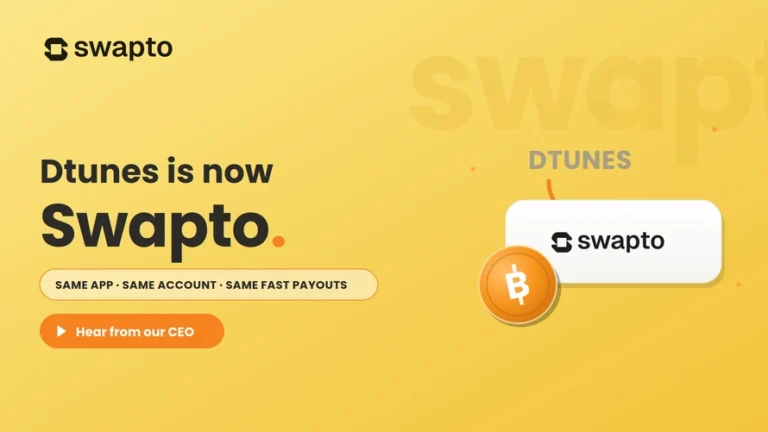
3. Consider an OTC platform such as Swapto (Formerly Dtunes)
This is where the difference in transaction structure becomes evident. With traditional P2P, you are exposed to the risk of dealing with a stranger who is buying or selling crypto. With the OTC model, the platform itself handles the transaction rather than match you to a stranger willing to trade with your particular bank.
The beauty of this is that Swapto(Formerly Dtunes)operates under Nigeria’s Investment and Securities Act 2025, partnering with SEC-regulated infrastructure providers for secure transaction processing.
Swapto, formerly known as Dtunes, is a Nigerian OTC crypto-to-naira platform. Its current app listing says it supports payouts to every major Nigerian bank and specifically names banks including GTBank, Access Bank, UBA, Zenith, First Bank, Opay, and PalmPay.
For users of one of the 8 affected payment methods, the good news is therefore not simply in getting another P2P marketplace, it is the possibility of not having the need to find an individual advertiser who accepts your particular payment method.
Ready to try a P2P-free alternative? Download Swapto on iOS or Android. Cash out your first trade in under 10 minutes. Support available on WhatsApp at +234 811 337 2579.
Download SwaptoWhy OTC Can Solve This Particular Problem
The main difference between P2P and OTC is who you are dealing with. On the P2P marketplace, your transaction depends on another trader. Their bank, their payment method, their responsiveness, and truthfulness all become part of the transaction. But with the OTC service, instead of negotiating with an unknown advertiser, you transact directly with the platform.
That removes any counterparty risk that comes with conventional P2P, even though it is advisable for users to cross-check the platform’s regulatory status, fees, prevailing market rates and customer support.
Swapto service supports naira payouts to major Nigerian banks (including the 8 banks that were delisted by Bybit) within five to 10 minutes. Its app listing also says the platform operates under the Investment and Securities Act 2025 and within the SEC framework.
For someone affected by the Bybit change, the OTC platform has proven to be the most appealing alternative, where you don’t have to find a stranger who accepts Jaiz Bank, Ecobank or Stanbic IBTC. You only need a service that can settle directly into your bank account.
How to Sell on Swapto
For users who have their crypto already and want to use a compliant service, the process is generally straightforward:
- Create an account with the platform: Swapto is available through the App Store and Google Playstore. Download the app and create an account.
- Complete the platform’s identity verification: This takes less than 5 minutes. Swapto’s current listing describes identity verification as part of its onboarding process.
- Send crypto to your Swapto wallet at the shown network: Always confirm the network and receiving address before sending anything.
- Review the quoted naira before confirming the transaction.
- Withdraw to any Nigerian bank in 5-10 minutes: Receive the naira payout into your Nigerian bank account once the transaction is processed.
Swapto’s current app listing says it supports cryptocurrencies such as Bitcoin, USDT, Ethereum, etc., and with five to ten minutes bank payouts.
Please note that the exact rates, supported asset, network, verification requirements and payout time can change slightly based on different factors. Users should check the app before every transaction and not rely on previously displayed facts.
Frequently Asked Questions
Is Bybit leaving Nigeria completely?
No. Bybit’s September 2026 announcement does not say that the exchange is shutting down Nigerian operations. It specifically stated the 8 payment methods which will no longer be available.
When exactly did the change take effect?
The change took effect on September 1, 2026, at 10:00 AM UTC, which was around 11:00 AM Nigerian time. From then, the 8 affected payment methods could no longer be used to create NGN P2P advertisements or trade against advertisements using those methods.
What are the affected payment methods?
The affected methods are PAGA, Chipper Cash, Carbon Microfinance, Jaiz Bank, Stanbic IBTC Bank, Ecobank, Polaris Bank and Union Bank. Bybit listed all 8 in its official announcement.
What should I do if I use one of these banks?
You have three options. You can add another payment method supported by Bybit, consider another P2P marketplace, or use an OTC service that can pay directly into your Nigerian bank account.
Are P2P alternatives still safe?
By default, P2P is not unsafe, but it carries counterparty risk. According to Breet’s 2025 study, a larger percentage of its surveyed Nigerian P2P traders had lost money to scams at least once, with fake payment proofs among the problems identified. Using another P2P exchange therefore does not eliminate the underlying risks.
Does Swapto support Jaiz Bank, Ecobank, Stanbic IBTC and the other affected banks?
Yes, Swapto’s supports payouts to every major Nigerian bank, including GTBank, Access Bank, UBA, Zenith, First Bank, Opay and PalmPay.
The Bottom Line
Bybit’s removal of 8 Nigerian payment methods confirms that the country’s P2P crypto market is becoming more restrictive. It does not mean Bybit has left Nigeria, but it means affected users need to reconsider how they access NGN liquidity.
A wise response is not to jump from one P2P platform to another, but to observe the options, understand the counterparty and regulatory risks, and choose the route that guarantees you safe and secured transactions over a longer period of time.
For readers considering an OTC alternative, Swapto is available as an official upgrade of Dtunes, with support through its app and WhatsApp at +234 811 337 2579. If you want to see how Swapto handles crypto-to-naira conversion without P2P complications, check the live rate calculator to see what your crypto is worth in naira right now.