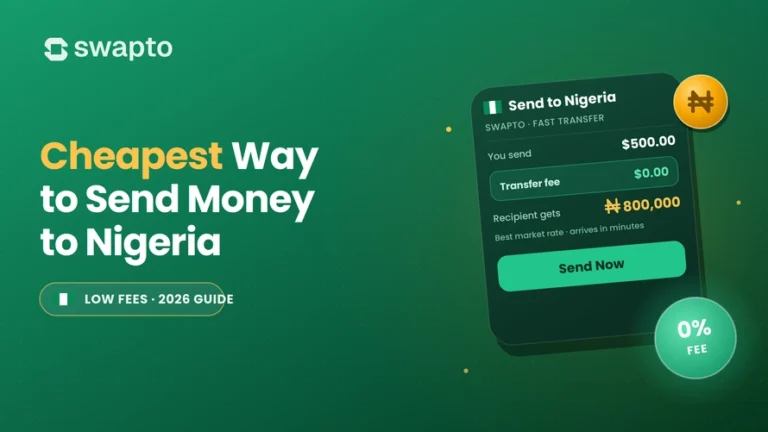
Millions of Nigerians abroad send money home to parents, siblings, spouses, and business partners every month. Most of them use the same handful of apps, such as Wise, Remitly, WorldRemit, Western Union, Sendwave, or MoneyGram. Most of these apps may be popular, but people subtly lose more money using them than they need to.
If you’ve made findings on the cheapest way to send money to Nigeria from the UK or fastest way to send money to Nigeria from the US, you must have noticed that every comparison article looks almost identical. They compare remittance brands against each other, move a few percentages around, then recommend whichever company sponsored the article. But there is one option those articles usually don’t discuss adequately, that is the crypto route.
The crypto route is such a mind-blowing option because the math changes interestingly once transfers get bigger. Under $500, Wise is usually the best option. Above $500, sending USDT and cashing out through a Nigerian off-ramp like Swapto often becomes cheaper and faster.
In 2024, Nigeria received roughly $4.76 billion in formal remittance inflows (according to metrics from the Central Bank of Nigeria). Across Africa, Nigerians abroad sent home billions through informal and crypto channels. The painful part is that remittance fees still consume 4% to 8% of many transfers. That means hundreds of millions of dollars disappear yearly in hidden FX markups, card fees, and transfer spreads. To solve this issue, we have prepared a guide to give a more practical comparison and solution.
This guide compares every major option for sending money to Nigeria in 2026 using real fee structures and worked examples at $100, $500, and $2,000. We’ll show where Wise wins, where Western Union still makes sense, and where the crypto route becomes the cheapest option available. As you proceed reading this article, download Swapto immediately to follow the instructions in this guide.
The 6 Real Ways to Send Money to Nigeria in 2026
There are six realistic methods most Nigerians abroad use today. Each has its strengths and weaknesses.
Wise
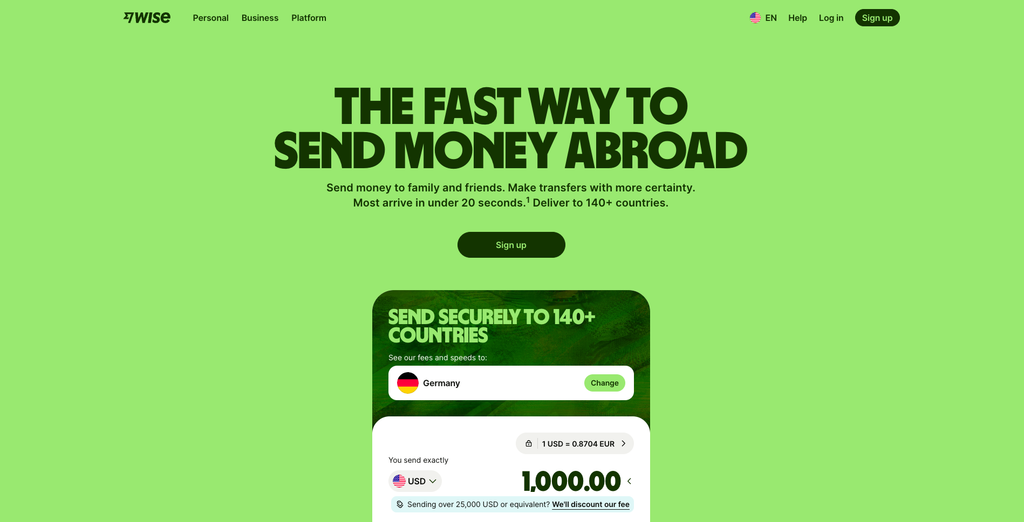
Wise is a global technology company that offers multi-currency accounts and cheap, fast international money transfers. Wise remains a top-choice for transparency. It uses the mid-market exchange rate and charges a visible flat fee instead of hiding profit inside the FX rate. Its sweet spot is small-to-medium transfers below $500.
Remitly
Remitly is a digital money transfer service that allows people to send money internationally to friends and family safely and quickly. Remitly is built around speed and convenience. Its Express transfers arrive quickly, and the app experience is smooth for first-time users. The downside is the exchange rate markup, which quietly increases the total cost.
WorldRemit
The WorldRemit app is a digital money transfer platform that allows you to send and receive funds across 130+ countries. WorldRemit performs well for African payment corridors and mobile-wallet delivery. It’s especially useful when recipients prefer mobile money or need flexible payout methods.
Western Union
Western Union is one of the most popular and oldest multinational financial services companies, primarily known for cross-border money transfers and remittance services to every country on Earth except Iran and North Korea. Western Union still dominates rural cash pickup and older users who trust physical agent locations. The tradeoff is cost and It remains one of the most expensive ways to send money to Nigeria in 2026.
Sendwave

Sendwave is a mobile app that allows users to send money internationally from the UK, North America, and Europe to countries across Africa, Asia, and the Americas. Sendwave works well for micro-transfers. Its no-fee marketing is attractive for £20 to £100 sends, although the exchange rate spread still exists.
Crypto Route (USDT + Swapto)
The crypto routes allow you to send money to Nigerian bank accounts from abroad. This is the option most remittance articles usually ignore. Instead of sending money through a remittance company, the sender buys USDT, sends it directly to the recipient’s wallet, and the recipient converts it to naira using a Nigerian platform like Swapto. For larger transfers, the savings become significant.
Download Swapto on iOS or Android. Cash out your first trade in under 10 minutes. Support available on WhatsApp at +234 811 337 2579.
Download SwaptoHow These Fees Actually Work (Read This Before the Tables)
Most people compare transfer apps incorrectly. They focus only on the visible fee but the visible fee is usually not where most providers make their money. There are two costs involved in every transfer:
1. The Flat Fee
This is the obvious fee you see upfront.
For example:
- $0.99 transfer fee
- $3.99 Express fee
- £0 advertised fee
This part is easy to compare.
2. The Exchange Rate Markup
This is where the real cost hides. Many providers quietly give you a worse USD/NGN or GBP/NGN exchange rate than the real market rate. If the true market rate is ₦1,377 per dollar and the provider gives you ₦1,330, the provider keeps the difference. That difference can quietly cost more than the visible fee. To send $1,000 to Nigeria, a 3% exchange-rate markup equals roughly $30. That’s why a so-called “free transfer” can still be one of the most expensive options available.
The correct way to compare providers is simple: Always compare how much naira your recipient actually receives, not the advertised fee.
The Comparison: Sending $100 to Nigeria
For small transfers, the crypto route loses some of its advantage because the setup effort and network costs matter more proportionally.
This is where Wise performs extremely well.
| Method | Fee | FX Markup | Naira Received | Time |
| Wise | $0.50 | 0% (mid-market) | ₦137,030 | 1-2 Minutes for cards.1-2 days for manual bank transfer |
| Sendwave | £0 | 1.5% | ₦135,015 | Takes between few minutes (other methods take few days) |
| Remitly | $3.99 | 1–3.7% | ₦131,500 | Express: same dayEconomy: 3-5 days |
| WorldRemit | $1.99 | 0.5–2% | ₦132,800 | Within 1hr |
| Western Union | $2.50+ card fee | 2–4% | ₦129,500 | Cash Pickup: few minutes Bank transfer: 1-5 days |
| Crypto(Swapto off-ramp) | $1 network | 1% spread | ₦135,400 | 5–30 mins |
$100 Verdict
Wise wins clearly at this amount. The mid-market exchange rate plus tiny fee make it extremely difficult to beat for small transfers. Sendwave comes close for UK senders.
The crypto route is still competitive, but the setup overhead doesn’t justify itself if you only send small amounts occasionally. If Chiamaka in Manchester is sending £70 to her mother for groceries, Wise is probably the smartest option.
The Comparison: Sending $500 to Nigeria
This is where the gap starts narrowing. Crypto begins competing directly with Wise.
| Method | Fee | FX Markup | Naira Received | Time |
| Wise | $3.50 | 0% (mid-market) | ₦683,750 | 1-2 Minutes for cards.1-2 days for manual bank transfer |
| Crypto(Swapto off-ramp) | $1 network | 1% spread | ₦681,000 | 5–30 mins |
| Sendwave | £0 | 1.5% | ₦676,000 | Takes between few minutes (other methods take few days) |
| WorldRemit | $2.99 | 0.5–2% | ₦671,000 | Within 1hr |
| Remitly Express | $3.99 | 1–3.7% | ₦663,000 | Express: same dayEconomy: 3-5 days |
| Western Union | $5 + card fee | 2–4% | ₦656,000 | Cash Pickup: few minutes Bank transfer: 1-5 days |
$500 Verdict
Wise still edges out the competition, but now the crypto route is close enough that the choice depends more on convenience and recipient preference. If the recipient already has Swapto installed, crypto becomes extremely attractive especially due to speed advantage. Western Union loses roughly ₦27,000 versus Wise at this amount (that’s the cost of hidden spread and legacy infrastructure).
The Comparison: Sending $2,000 to Nigeria
This is where the structural advantage of crypto becomes obvious. Traditional providers scale fees with transfer size. Blockchain network fees barely change.
| Method | Fee | FX Markup | Naira Received | Time |
| Crypto(Swapto off-ramp) | $1 network | 1% spread | ₦2,724,000 | 1-2 Minutes for cards.1-2 days for manual bank transfer |
| Wise | $10–15 | 0% (mid-market) | ₦2,734,000 | Hours |
| Sendwave | £0 | 1.5% | ₦2,693,000 | Takes between few minutes (other methods take few days) |
| WorldRemit | $2.99 | 0.5–2% | ₦2,690,000 | Within 1hr-1 day |
| Remitly Express | $3.99 | 1–3.7% | ₦2,659,000 | Express: same dayEconomy: 3-5 days |
| Western Union | $10+ card fee | 2–4% | ₦2,625,000 | Cash Pickup: few minutesBank transfer: 1-5 days |
$2,000 Verdict
The crypto route and Wise are now essentially tied as both massively outperform Western Union. At this transfer size, Western Union can quietly destroy nearly ₦100,000 in value between fees and exchange-rate markup. If someone sends $2,000 monthly for school fees, rent, or family support, that difference compounds into over ₦1 million yearly. That is no longer “just a fee.” That is real household money.
When Crypto Wins, When It Doesn’t
Honesty matters here. Crypto is not automatically the best solution for every situation.
| Scenario | Cheapest Option | Why |
| Under $200 monthly | Wise or Sendwave | Lowest overhead |
| $200–$500 | Wise | Mid-market rate dominates |
| $500–$2,000 | Wise or crypto | Extremely close |
| $2,000+ | Crypto route | Fees scale better |
| Recipient has no bank account | WorldRemit | Better mobile-wallet support |
| Recipient in rural area | Western Union | Largest pickup network |
| Need same-day delivery | Wise, Remitly, crypto | Fastest timelines |
| Business payments | Wise + crypto | Compliance plus efficiency |
The honest answer is this:
- Wise is genuinely excellent below $500.
- Crypto becomes increasingly powerful above $1,000.
- Western Union still matters for rural cash pickup.
- WorldRemit is useful for mobile-wallet recipients.
Different transfer sizes deserve different tools.
NB: The rates used are typically the prevailing market rates as at the time of writing this article. For better insights on the peculiarity of each platform, endeavour to check their respective website and social media pages.
How the Crypto Route Actually Works (For Anyone New to It)
Many people sending from abroad hear “crypto is cheaper” but never actually understand the workflow. Understanding how to send USDT to Nigeria is easy and simpler than most people expect. Below is a breakdown:
The Sender’s Side
- Buy USDT on Coinbase, Kraken, Revolut, Newton, or another regulated exchange.
- Select the TRC20 network when withdrawing (this holds the cheapest option)
- Send the USDT to the recipient’s wallet address.
- Network fee is usually around $1.
- Confirmation typically takes 2 to 5 minutes.
The Recipient’s Side in Nigeria
Receiving and converting USDT to naira is designed to be simple, even for first-time users. As a beginner, you can follow the basic procedures below and you’re good to go:
- Start by downloading the Swapto app and creating an account. Once your account is set up, navigate to the wallet section and generate your unique USDT wallet address. Share this address with the sender abroad so they can transfer the funds directly to you.
- After the USDT arrives in your Swapto wallet, open the app and select “Sell USDT.” Enter the amount you wish to convert, review the exchange rate and transaction details displayed on the screen, and confirm the trade.
- Once the transaction is completed, the equivalent naira value will be credited to your account. You can then withdraw the funds directly to your Nigerian bank account, making the entire process fast, secure, and convenient.
Most payouts complete within 5 to 10 minutes. The entire sender-to-bank timeline is often under 30 minutes. For someone like Chiamaka sending money from Manchester to Onitsha every month, the first transfer may feel unfamiliar, but by the third transfer, it becomes routine.
Why the Crypto Route Gets Cheaper at Scale
Traditional remittance companies grow more expensive as transfer size increases, however, crypto doesn’t behave that way. A $5,000 USDT transfer on TRC20 costs nearly the same network fee as a $200 transfer. That difference is why crypto becomes dominant at larger amounts. This is the part most comparison articles under-explain: they weigh remittance brands against each other and rarely give the crypto route the same attention.
Common Concerns About the Crypto Route
Is Sending Crypto to Nigeria Legal?
Simply Yes! Nigeria’s crypto environment changed significantly after the Central Bank of Nigeria (CBN) reversed its banking restrictions in December 2023. The Investment and Securities Act (ISA) 2025 further established the legal framework for digital assets and Virtual Asset Service Providers. Platforms operating within SEC-regulated compliance frameworks now function in a much clearer regulatory environment. As always, regulations evolve, so users should verify the latest guidance before large transfers.
Will the Recipient Get Scammed?
The risk isn’t the blockchain itself; the risk is usually the cash-out step. Random peer-to-peer traders can introduce counterparty problems. That’s why the receiving platform matters. Using a structured off-ramp like Swapto removes much of the uncertainty because the recipient sells directly through the platform rather than negotiating with unknown traders.
What If My Recipient Doesn’t Understand Crypto?
Most recipients don’t need to understand crypto deeply; they only need to understand the receive-and-sell workflow. This involves generating wallet addresses, receiving USDT and selling for naira.
That’s the entire process and the first setup takes a few minutes. After that, the experience becomes very similar to receiving any other digital transfer.
What If the Crypto Price Drops While It’s in Transit?
For remittances, stablecoins matter more than Bitcoin. USDT is pegged to the US dollar; that means the recipient isn’t exposed to Bitcoin-style price swings during transfer. Although, the exchange rate risk still exists between the dollar and naira, but not between the dollar and the stablecoin itself. That’s why stablecoins dominate remittance use cases.
A Note for US Senders About the 1% Remittance Tax (now in effect, 2026)
US-based Nigerians should pay attention to evolving remittance tax discussions. A 1% US federal excise tax on certain international money transfers took effect on 1 January 2026. It applies mainly to transfers funded with cash or a money order — sends funded from a bank account or a debit/credit card are generally exempt, so traditional providers collect it only on cash-funded transfers. Crypto transfers may be treated differently because buying USDT is not structured identically to a conventional remittance transfer, however, this area is still evolving. So, always verify the latest IRS and federal guidance before transacting.
Likewise, parties involved in the transfer and receipt of funds must learn how to Avoid Crypto Scams.
How to Avoid the Hidden FX Markup Trap
Most people still compare transfer apps incorrectly. Here are three simple rules to note:
- Compare Naira Received, Not Advertised Fees
A “free transfer” can still be more expensive. Always compare the actual naira amount arriving in Nigeria.
- Check the Mid-Market Rate First
Look up the real USD/NGN rate before sending, then compare each provider’s implied exchange rate. If the gap is large, the provider is hiding profit inside the FX spread.
- Don’t Trust First-Transfer Promotions
Many apps offer artificially good first-transfer rates, but their second and third transfers are often worse. So, always compare rates every time.
Cheapest Way to Send Money to Nigeria: The Decision Tree
If you only remember one section from this article, let it be this one. Here’s the method to use:
- To send under $200 occasionally, use Wise or Sendwave
- To send $200–$500 monthly, use Wise
- To send $500–$2,000 to a Nigerian bank, try Wise or crypto route
- To send $2,000+ regularly, try the crypto route
- If your recipient needs cash pickup, consider Western Union
- If your recipient only has mobile wallet access, try WorldRemit
- If you need maximum speed, don’t think too much, use Wise, Remitly, or crypto route
- If you want the most transparent pricing, use Wise
Don’t assume one provider is best for every amount, this is the biggest mistake people make. The best option may change depending on transfer size and recipient needs, but generally speaking, it’s advisable to send money to Nigeria with crypto.
How to Set Up the Crypto Route for Your Family
If your recipient in Nigeria is open to trying the crypto route, setup is straightforward.
- Tell your family member to download Swapto on App Store or Google Play
- They create an account and generate a USDT wallet address.
- You buy USDT on Coinbase, Kraken, Revolut, or another exchange.
- Send the USDT using the TRC20 network.
- They’ll receive the USDT inside Swapto.
- Then they tap “Sell USDT.”
- Naira arrives in their Nigerian bank account.
Many first-time users complete the entire setup in under 15 minutes.
Frequently Asked Questions
Which app is cheapest for sending money to Nigeria in 2026?
Below $500, Wise is usually the cheapest because it uses the mid-market exchange rate and keeps fees transparent. Above $500, the crypto route using USDT and a Nigerian off-ramp like Swapto often becomes cheaper because blockchain network fees stay low even as transfer sizes increase.
How much does Western Union charge to send money to Nigeria?
Western Union’s total cost often ranges between 4%-8% once you combine visible fees and exchange-rate markup. On larger transfers, that difference becomes significant compared to Wise or the crypto route.
Is Wise cheaper than Remitly for Nigeria transfers?
Usually, Yes. Wise uses the mid-market exchange rate and charges a small transparent fee (around 0.43% on most corridors). Remitly’s exchange rate markup ranges from 1% to 3.7% above mid-market, plus a flat fee of $3.99 for Express transfers. On a $500 sent to Nigeria, Wise usually returns roughly ₦20,000 more than Remitly Express.