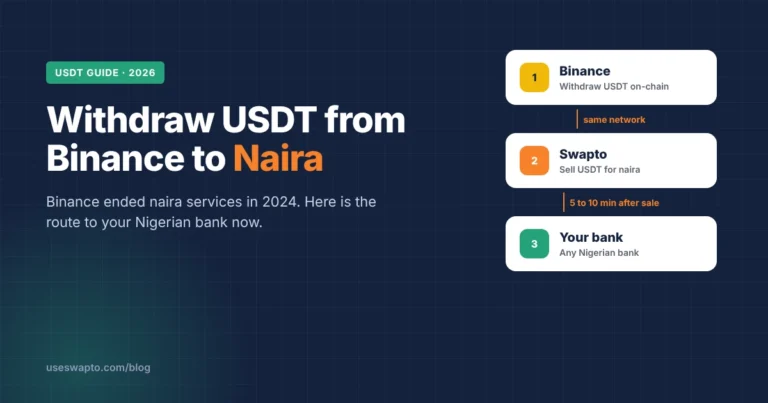

Quick answer: To turn your USDT into Naira, send it from Binance to your Swapto deposit address on the same network, sell it, and withdraw to your Nigerian bank. The payout takes 5 to 10 minutes after you sell.
The reason why you cannot withdraw Naira directly to your Nigerian bank account is because Binance stopped offering any Naira service in Nigeria in 2024, causing services like the Naira deposits, withdrawals, spot trading and P2P trading to be significantly affected. This didn’t mean that all Binance crypto services were getting shut down. It’s important to state the difference: seeing some USDT on your Binance account doesn’t imply that Binance currently offers you a Naira payment option for the coin.
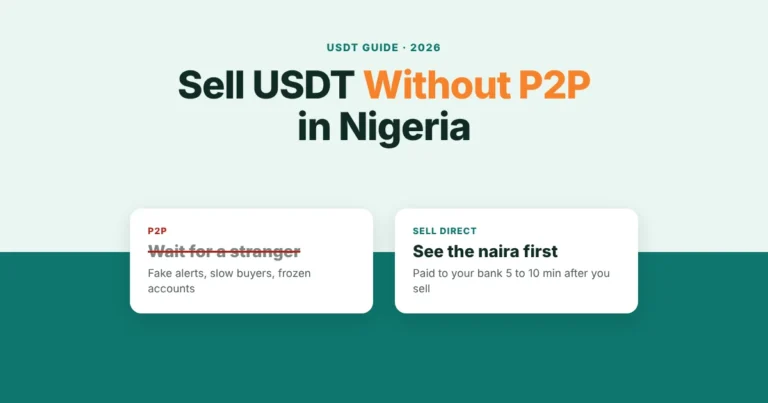
This guide will look into what has changed, what the different USDT networks are, why withdrawals may be sometimes delayed and what Nigerian users need to understand before deciding on what to do with the cryptos that they hold. To get a wider explanation about alternatives to P2P, check out our guide to selling USDT without P2P in Nigeria.
Key takeaways
- In 2024, Binance suspended its services for the Nigerian Naira: Cryptocurrency trading pairs and P2P trading were halted with NGN deposits and withdrawals, while other crypto services continued.
- Binance P2P has eliminated naira trading pairs: The presence of other currencies in the market does not imply that trading of NGN is now available.
- USDT operates on different blockchain networks: TRC-20, ERC-20 and BEP-20 are different and non-interchangeable, selecting an incompatible network can lead to deposit issues and loss of assets.
- There is a difference in withdrawal cost and processing time: Various factors such as exchange fees, network activity, security checks and receiving-platform processes can influence the transaction time and cost.
- Nigeria’s crypto users need to be aware of their tax and security responsibilities: Maintain proper transaction recordings, always seek official tax advice and never give strangers passwords, private keys or recovery phrases.
Why can’t you sell USDT for Naira on Binance?
The political developments on cryptocurrencies and foreign exchange in Nigeria led to the termination of Binance’s Naira services in March 2024. Binance announced that it has suspended all NGN trading pairs from its P2P trading platform on 28 February 2024. It later suspended Naira deposits on 5th of March and Naira withdrawals on 8th of March 2024, respectively. The remaining Naira balances in users’ accounts were to be automatically converted to USDT after 08:00 UTC on 8 March 2024 at 1 USDT = 1,515.13 NGN. Customers could keep using Binance for other cryptocurrencies.
This is because Nigerian users are still able to access their Binance accounts and cryptocurrency balances even without the Naira option available. The move by Binance did not mean or suggest that USDT itself became unavailable. The change by Binance, however, still concerned its support for Nigerian users.
For the wider background, read: Is Binance still available in Nigeria?
Can you still use Binance P2P in naira?
Binance P2P is a digital trading platform where users can engage in trading specific currencies that are supported by Binance using a payment method that is available to them in their area.
However, on 28 February 2024, Binance delisted all NGN trading pairs from its P2P trading platform. This should not be confused with the availability of other currencies and payment methods on the platform, as this restriction was specifically against the Nigerian Naira. Also, it is crucial to differentiate Binance P2P from the overall Binance platform. The elimination of Naira P2P pairs doesn’t automatically affect other services on Binance.
In some of the older online guides, Nigerians are still being told how they can sell USDT on Binance P2P with Naira. The instructions may no longer reflect the current situation of the platform’s service for Nigerians. To learn more about P2P trading, read our guide on how to use P2P crypto exchanges in Nigeria.
How do you get your USDT from Binance into a Nigerian bank account?
As mentioned earlier, Binance no longer has the same direct Naira withdrawal method that it had prior to March 2024. Before, a Nigerian bank account directly received or deposited Naira for the sale or purchase of USDT (a digital asset) on the Binance platform. If a service is able to accept both cryptocurrency and Naira transactions directly, then the process involves conversion and, subsequently, the bank transaction. These are two separate activities, different from simply storing USDT on an exchange.
Since you can no longer sell USDT directly to Binance in order to receive Naira in your Nigerian bank account, you would therefore need a direct-sale app like Swapto, which receives the USDT from Binance and directly processes your payment to the bank account of your choice.
Swapto operates within Nigeria’s regulatory framework through a licensed partner. It’s important that readers independently check out our current terms of service, supported assets, and applicable verification requirements for the service, and not rely on old or outdated information.
Also, before relying on other third-party services, ensure you know who operates it, what its terms are, its verification requirements, and how complaints are handled. Don’t take anything for granted because it claims to accept Naira payments or has an app.
In addition, you can read about how to avoid cryptocurrency scams before using any service that you’re not familiar with in Nigeria.
How do USDT withdrawals from Binance work?
Note that a cryptocurrency withdrawal is not the same as a Naira bank withdrawal. Generally, a crypto withdrawal is a transaction initiated by an exchange to transfer a cryptocurrency from an account to a blockchain wallet address. The exchange might perform a security check before broadcasting it, after which the blockchain network processes it.
It’s not the same as a normal bank transfer. A bank transfer is a transaction that takes place in the banking system. However a cryptocurrency transaction relies on the blockchain network it uses and the service(s) that it uses. This is why a transaction can be pending when the user feels that everything has been done properly at his end. Whereas, at the other end, the exchange may be reviewing the transaction, the network might be busy, or the exchange that should receive the request or transaction may not identify it yet.
If someone has not been able to withdraw the crypto, the best thing is to reach out to the official support channel of the said platform. Avoid tricks by strangers you meet through private channels that they can access delayed funds.
How do you withdraw USDT from Binance?
To withdraw USDT from Binance to Swapto, open your Swapto deposit screen to copy the USDT address for your chosen network, then go to Assets > Send > Withdraw Asset (or On-chain Withdraw) in Binance to send it. Here is a step-by-step guide to withdraw your crypto:
- Get your Swapto address: Open the Swapto deposit screen, choose USDT, select the network you plan to use, and copy the deposit address.
- Open Binance withdrawals: Log in to the Binance app and go to Assets > Overview > Send (or Assets > Send > On-chain Withdraw).
- Select USDT: Tap ‘Withdraw Asset’, choose the account to send from, and select USDT.
- Paste the address: Paste the USDT address copied from Swapto into the address field.
- Pick the matching network: On Binance, select the exact same network that you selected or copied from Swapto. A mismatched network can cause permanent loss of funds.
- Enter the amount: Type how much USDT to send and check the network fee shown on screen.
- Confirm and verify: Tap withdraw, double-check the address, network, and amount, and complete security verification (such as 2FA) to submit.
Which network should you choose on Binance?
USDT exists on multiple blockchain networks. TRC-20, ERC-20 and BEP-20 are three network standards associated with USDT, but they are not interchangeable labels.
| Network | Blockchain | Important Feature |
|---|---|---|
| TRC-20 | TRON | Uses the TRON network |
| ERC-20 | Ethereum | Uses the Ethereum network |
| BEP-20 | BNB Smart Chain | Uses BNB Smart Chain |
Many people mistake the ERC-20 and BEP-20 addresses because they both start with 0x. The first characters in an address are not enough to determine the network a service supports.
Network compatibility is important because the receiving service must be compatible with the network that the sending platform is operating on. If there is a mismatch, a deposit might not show up as it should, thereby leading to loss of funds.
Note: Do not think that two different USDT addresses are compatible because they are similar. This is why you must check that the address and network are exactly the same before you send. Also, network support, availability and transaction requirements can vary between platforms. Always refer to official documentation and support of platforms for any clarification you need.
How much does it cost and how long does it take?
There are a number of possible charges to be aware of:
- Exchange withdrawal fee: Platforms may have a withdrawal fee for a withdrawal of cryptocurrencies.
- Network fee: There can be a network fee for blockchain transactions.
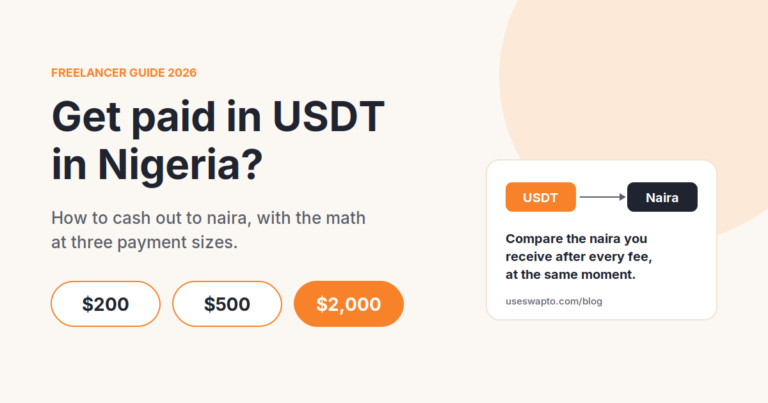
- Conversion rate: USDT to Naira conversion can also impact the amount of naira you receive.
Other charges may apply to bank-related services and payments, depending on the type of service and payment.
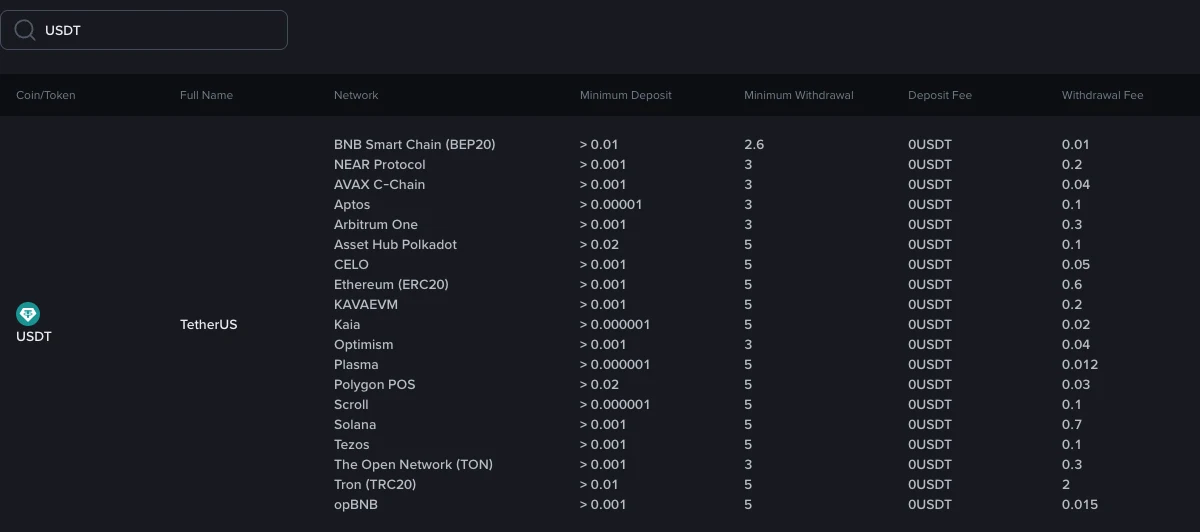
Binance charges a flat withdrawal fee for USDT that depends on the blockchain network you select, not the withdrawal amount. Internal transfers to another Binance account are free. Network fees can fluctuate with blockchain congestion, and Binance displays the exact fee on the withdrawal screen before you confirm. These were the fees on Binance’s fee page on 22 November 2026:
- BNB Smart Chain (BEP20): 0.01 USDT
- opBNB: 0.015 USDT
- Polygon POS: 0.03 USDT
- Tron (TRC20): 2 USDT
- Ethereum (ERC20): 0.6 USDT
There is no definite processing time that applies to every cryptocurrency withdrawal. A withdrawal can involve several stages:
- Exchange processing: The platform (Binance) may carry out security checks before processing a request.
- Blockchain confirmation: After a transaction is broadcast, the relevant network needs to process it.
- Receiving-platform processing: A receiving service may have its own checks before recognising a deposit or updating an account balance.
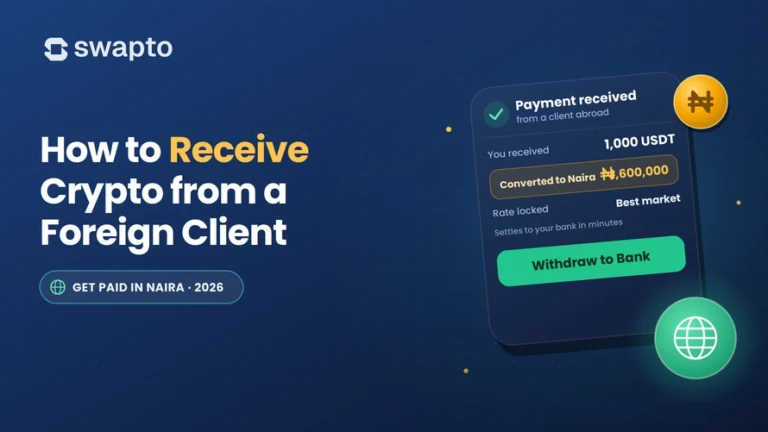
It is after the receiving platform (like Swapto) receives the crypto that you can process your bank payout, which takes between 5 to 10 minutes after you sell. The three stages above are involved in a crypto withdrawal. Other factors that can affect the overall time include network activity, maintenance, and security reviews.
How do you sell the USDT and withdraw naira?
Here is a step-by-step process to sell your crypto through Swapto:
- Download Swapto and verify your identity with your BVN
- Tap Deposit, choose USDT and the network (TRC-20, ERC-20 or BEP-20), then copy your address.
- Send USDT from Binance on the same network
- Sell: turn on auto-sell to automatically convert the moment it lands, or manually tap Sell and check the Naira amount before you confirm.
- Withdraw to your Nigerian bank account. Naira arrives in 5 to 10 minutes.
Do you pay tax on USDT transactions in Nigeria?
The Nigeria tax framework was updated in 2025 with the enactment of the Nigeria Tax Act 2025 that came into effect on 1 January 2026. The Act contains provisions on digital and virtual asset transactions. In July 2026, the Joint Revenue Board also released guidelines on taxing virtual assets. These guidelines are intended to give further information to taxpayers and virtual asset service providers and other participants in the sector.
Tax note: From 1 January 2026, profits from selling crypto are taxable under the Nigeria Tax Act 2025 at personal income tax rates. Keep a record of what you bought, when, and for how much. This is general information, not tax advice.
The tax treatment of a specific transaction may be subject to the nature of the transaction, the circumstances of the taxpayer and the provisions applicable to the transaction. For instance, a digital asset received as a payment for a service could be a different type of asset from one that is bought and stored for investment purposes.
Maintain good records of relevant transactions including dates, quantities and supporting documents. For any uncertainty as to how the rules may apply to your situation consult a qualified Nigerian tax professional.
Frequently asked questions
Can I withdraw Naira directly from Binance?
No. Binance discontinued its Nigerian Naira services in March 2024. Its announcement covered Naira deposits, withdrawals, spot trading pairs and P2P trading pairs.
What happened to Naira left in Binance accounts?
Binance announced that remaining NGN balances in users’ Spot and Funding wallets would be automatically converted to USDT from 8 March 2024. The announced conversion rate was 1 USDT to ₦1,515.13, based on the average closing price of the USDT/NGN spot pair over the preceding seven days.
Is Binance banned in Nigeria?
No regulatory body has formally banned Binance in Nigeria, but in June 2023 the SEC said Binance Nigeria Limited was not registered or regulated by the Commission. The removal of Binance’s Naira services should not be interpreted to mean every Binance service is banned. Nigeria’s regulatory position has further developed since 2024, and virtual asset activities are subject to evolving legal and regulatory requirements.
Why is my Binance withdrawal pending?
A withdrawal may remain pending because of exchange security checks, maintenance, network congestion or other processing requirements. Availability can also differ by asset and network, particularly during phased service restoration. Refer to Binance’s official support channels to understand the status of your withdrawal.
What happens if the wrong USDT network is used?
A network mismatch can prevent a receiving platform from recognising a transaction, causing loss of assets.
Is USDT the same as Naira?
No. USDT is a digital asset designed to track the value of the US dollar, while the Naira is Nigeria’s national currency. Their values, uses and payment systems are different. A service that supports both may provide a conversion facility.
Do I need to verify my identity when using a cryptocurrency service?
Yes, you need to verify your identity to use Swapto. Identity verification is required by Nigerian regulations for adequate security purposes.
Conclusion
Binance’s removal of Naira services in 2024 explains why Nigerian users cannot rely on the exchange for the same direct naira options that were previously available. Holding USDT on Binance and receiving Naira into a Nigerian bank account are two separate activities. To convert USDT to Naira from Binance, you need a direct-sell platform like Swapto to process your payout directly into your Nigerian bank account.
About the author: Emmanuel Tijani is a content writer and SEO specialist with experience covering cryptocurrency, fintech, digital payments and technology. He focuses on creating clear, informative content that helps readers understand complex topics and make informed decisions.